This is yet another real-life example involving one of my relatives who experienced blessings through the Buddha Dharma.
Over the years that I have been learning the Buddha Dharma, I have introduced quite a few people to Buddhism. Regrettably, perhaps because my own cultivation has not been good enough, none of them ultimately continued. Yet there was always one wish in my heart: I wanted to bring my mother-in-law to listen to the Dharma.
I knew that she was sincere and genuine in the way she treated others. Although she had little formal education and was hearing-impaired, I felt certain that she might actually learn better than I did. However, because she was elderly and physically frail, and because the journey was rather long and transportation inconvenient, I kept the thought to myself for quite some time and did not dare bring it up with her.
In April 2025, after we had finished a life-release activity, I finally decided to ask her.
“Mom, it’s still early today. Why don’t you come with me to listen to the Dharma discourses of Namo H.H. Dorje Chang Buddha III?”
Afraid that she might refuse, I added, “Mom, the matter of birth and death is of the utmost importance, and impermanence comes swiftly. You are already in your seventies. You should quickly begin learning the true Tathagata Dharma and listening to the Dharma discourses of H.H. Dorje Chang Buddha III so that you can attain liberation from birth and death in this lifetime. You are such a kindhearted person. I’m sure you will learn even better than I do.”
After hearing this, she agreed, and we went to the Buddhist altar room in my home to respectfully listen to a Dharma discourse.
After she returned home, she called me and said that she could not understand it and wondered whether she should stop going. Perhaps because she was family, I spoke to her rather directly. Raising my voice so that she could hear me, I said, “Mom, if you don’t understand it now, you can learn gradually. There are many things I don’t understand either. But think about how much suffering there is in life. If we do not learn Buddhism, we will suffer even more as we continue to reincarnate within the six realms. The opportunity to encounter a Buddha in this world is exceedingly rare. Only by learning the true Tathagata Dharma taught by H.H. Dorje Chang Buddha III can we have hope of attaining accomplishment and liberation in this lifetime. Learning Buddhism requires a sincere heart and perseverance.”
Seeing that I was unhappy, she reluctantly replied, “All right, then.”
When she agreed to continue coming to listen to the Dharma, I was overjoyed. I thought it might be better to first show her videos about the true Buddha Dharma. They presented many extraordinary and inconceivable manifestations of the Buddha Dharma, which I hoped would strengthen her faith.
Sure enough, the videos sparked her interest. I then began having her listen to Dharma discourses, starting with the first lesson, The Unsurpassable, Supreme Dharma.
From then on, regardless of bitter cold, scorching heat, wind, or rain, she faithfully made the trip to my home every day, relying on others for transportation so that she could listen to the Dharma. Later, I also brought her to our Dharma center to participate in group study and practice so that she could experience the atmosphere of learning Buddhism together with others.
She increasingly came to appreciate how wonderful and extraordinary learning Buddhism was. She has continued steadfastly ever since and has never again thought about giving up. She often feels filled with Dharma joy.
Although she has little formal education and is not very good at sharing her thoughts, she often expresses her feelings in her own simple and heartfelt way:
“Oh, what is being taught is truly wonderful!”
Her Hearing Recovered After More Than a Year of Learning the True Buddha Dharma
After persevering in respectfully listening to the Dharma discourses of H.H. Dorje Chang Buddha III for more than a year, she began experiencing significant changes in her physical condition.
At first, some of her hair began turning black again. Then the pain in her legs disappeared, and she became much more agile when walking.
Most astonishing of all was the change in her hearing. Because her hearing had been very poor for many years, she had always needed to wear hearing aids. One day in early July of this year, she told me that a large amount of pus had suddenly drained from her ear. I wondered whether this might be a response associated with receiving blessings.
I said to her, “Mom, you are so sincere and devout. Every day you travel such a long distance to come here and listen to the Dharma. The Buddhas and Bodhisattvas will surely bless you.”
Then, this morning, I received a phone call from her. In an excited voice, she told me:
“My ear is better! I can hear sounds even without my hearing aid now. This is wonderful! This is wonderful!”
I was so happy for her. For someone who had suffered severe hearing loss for so many years, being able to hear again without a hearing aid undoubtedly felt like being given a new life.
I said, “Mom, this is all due to the compassionate blessings of the Buddhas and Bodhisattvas. The sincerity you have devoted to learning the Dharma has touched the Buddhas and Bodhisattvas. The Buddha Dharma is truly magnificent and inconceivable!”
The changes she experienced have also strengthened my own confidence and determination to learn and practice the Buddha Dharma well.
When I reflect upon myself, I realize that I have sometimes allowed myself to become entangled in family matters and have not been nearly as diligent as she has. The Buddha Dharma is so real and true, and the Buddhas and Bodhisattvas are so greatly compassionate. What, then, is there that I cannot let go of?
Sometimes, what suddenly wakes us up and brings clarity to our minds is not the sound of a temple bell. It can be something as ordinary as watching the countdown on a traffic light at an intersection.
That day, I was riding my scooter and stopped at a red light. I found myself staring at the numbers as they counted down, one second at a time…
Normally, those numbers simply tell us how many seconds we have to wait before moving on. But for some reason, at that moment, something gently struck me deep inside.
I suddenly realized: It wasn’t just the traffic light that was counting down. Our lives are counting down too.
Every time another second disappears from the display, one second of our own lives is gone as well.
We often talk about the Buddhist teaching of “impermanence.” We have heard countless times how swiftly life passes and how quickly circumstances can change. In His Dharma discourses, Namo H.H. Dorje Chang Buddha III has also compassionately reminded us time and again of how frightening impermanence can be and how it is constantly unfolding right before our eyes.
Yet this is simply how we human beings are. We may understand these teachings intellectually, but somehow they never seem to truly frighten us deep down.
We continue drifting through our days in a haze. We still lose our temper. We still tightly hold on to attachments, grudges, and conflicts that we cannot seem to let go of. We always think there is still plenty of time. We simply assume that when the sun rises tomorrow, we will still be here.
It often takes an ordinary, seemingly insignificant moment to suddenly wake us up:
From the day we were born, our lives have already been counting down.
Older generations often say that the frightening thing is not that we are slowly growing old, but that we do not even realize we are growing older day by day.
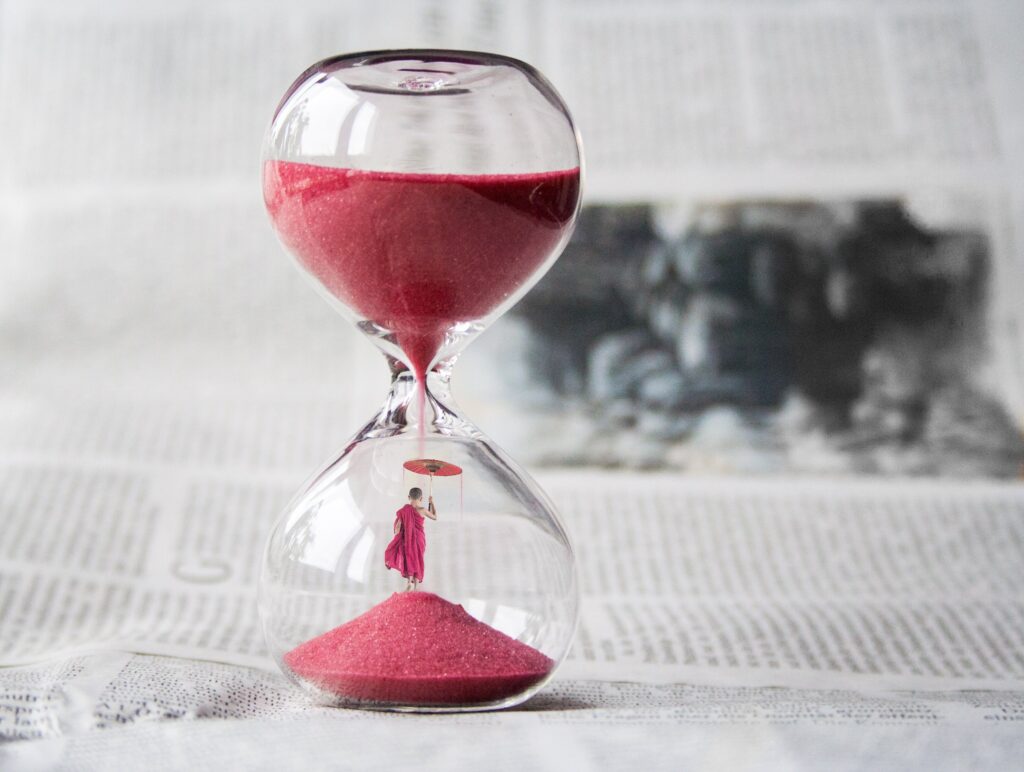
When today passes, one more day of our life is gone. When this second slips away, we will never be able to get it back again.
The Verse of Admonition by Samantabhadra Bodhisattva says:
“This day has already passed, and our lives have likewise diminished. Like fish in a shrinking pool of water, what joy can there be? We should diligently and vigorously cultivate ourselves, as urgently as if extinguishing a fire upon our heads. Be ever mindful of impermanence, and never give way to negligence.”
Every time I read this verse, it strikes me deeply.
Aren’t we just like fish in a pond whose water is slowly drying up? The water decreases day by day, yet we are still fighting fiercely with one another over a few pieces of fish food, completely forgetting that before long, when the water dries up, none of us can escape what follows.
When we look back carefully at all the noise and turmoil of this world—the pursuit of fame and personal gain, who wins and who loses—the things that once seemed unbearable, the things we thought we could never let go of, what do they amount to when we look back several years later?
They were little more than a dream from which we eventually awakened.
What truly matters in life has never been whether everything goes our way at this particular moment. What really matters is whether, during this lifetime, we have sincerely followed the Buddha’s teachings, whether we have earnestly cultivated ourselves, and whether we have worked toward freeing ourselves from the suffering of reincarnation.
If we can show others a little more compassion, then let us do so.
If we can lessen our attachments even a little, then let us loosen our grip.
If there is a good deed we can do today or a kind thought we can give rise to today, we should not put it off until tomorrow.
Because none of us knows what awaits us after the light turns green and we pass through this intersection.
At the next crossroads, will we simply continue along the familiar road we have traveled so many times before—or will we have reached the end of our journey in this life?
While we still have the strength, and while we still possess this precious human body, let us remind ourselves of this at every moment.
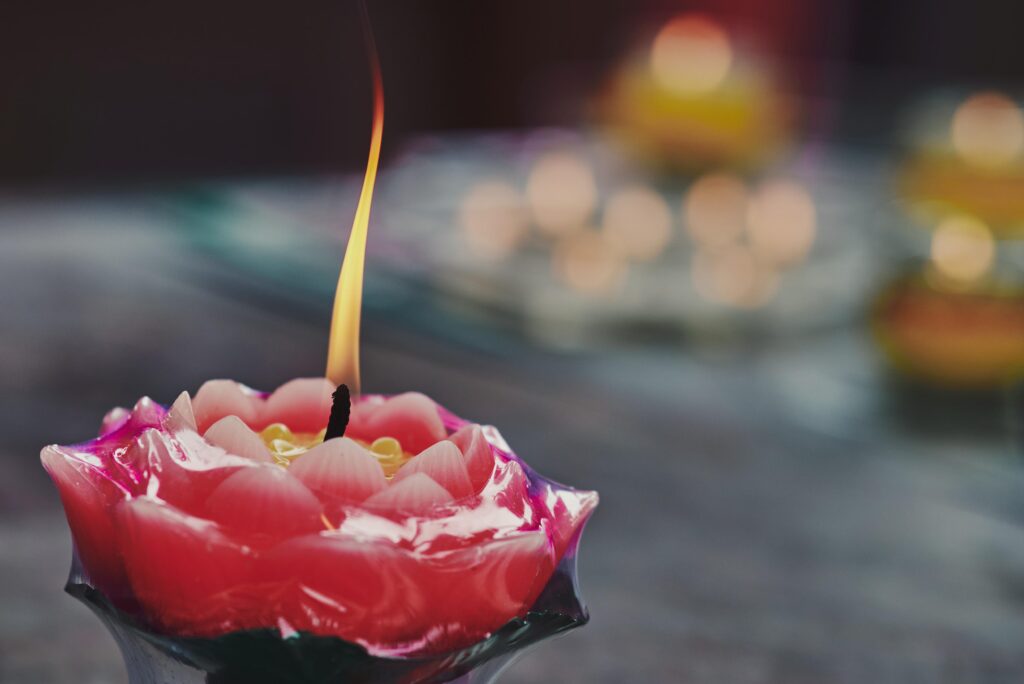
Do not wait until the light has gone out to regret having let this precious life pass by in vain.