My Personal Experience: The High Price of Saving Face

My Personal Experience: The High Price of Saving Face
My Personal Experience: The High Price of Saving Face

My Personal Experience: The High Price of Saving Face

From ancient times to the present, many people have placed great importance on “saving face,” often associating it with reputation and social status. Outwardly, they want to maintain a favorable image in the eyes of others; inwardly, they want to satisfy their own vanity. So, if someone causes them to “lose face,” serious trouble may follow.

Think about it carefully. It can be something as minor as a group of people scrambling to pay the bill at a restaurant, or something as serious as a tragedy caused by someone desperately trying to protect a fragile sense of pride. So many conflicts arise simply because people care too much about “face.”

When I was a child, I too once paid a price for wanting to save face.

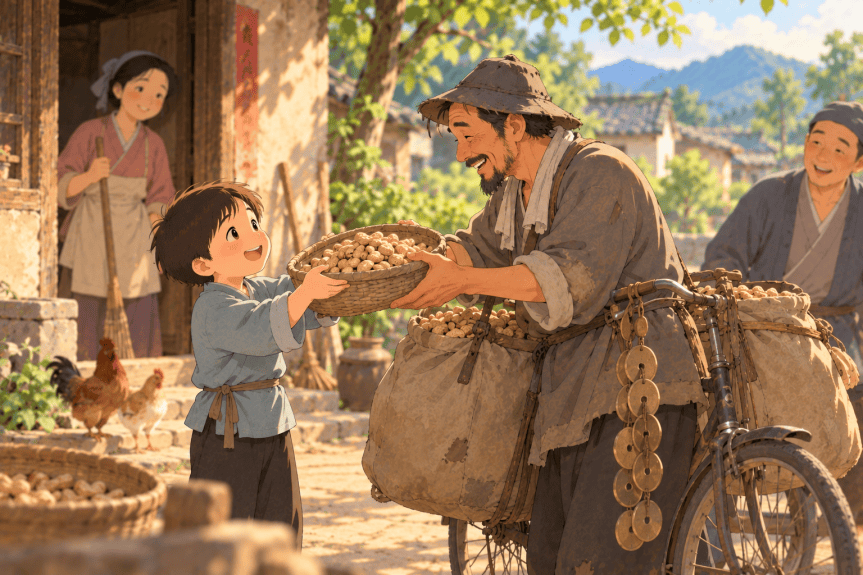
In the 1970s, everyday necessities were relatively scarce. Toothpaste tubes were made of aluminum, and itinerant peddlers often traveled from village to village collecting used tubes. Every so often, someone would also come to the village to castrate roosters and collect empty toothpaste tubes and the inner linings of chicken gizzards, known in traditional Chinese medicine as Ji Nei Jin.

Not many people did this kind of work. They traveled either on foot or by bicycle, carrying a long string of copper pieces fastened together somewhat like traditional Chinese clappers. As they walked, the copper pieces swung and struck against one another. Their distinctive clattering could be heard from far away, inevitably setting the chickens squawking and dogs barking in the otherwise quiet village.

One day, one of these peddlers became thirsty and stopped by our house for some water. After greeting him, my mother went to work at the threshing ground beside our house.

The man kept talking to me, trying to win me over. “What a good child!” “What a clever little one!” Compliments cost him nothing, and they came pouring out one after another. Before long, I was completely carried away by his flattery.

He asked me to bring him some peanuts to taste, and I obediently did as he asked. I brought him a large scoop filled to the brim with peanuts.

He showed no hesitation whatsoever. He dumped all the peanuts straight into the two large bags hanging from either side of his old-fashioned bicycle—and even remarked that it was not very much.

Just then, a fellow villager happened to pass by.

The peddler deliberately raised his voice and said, “What a hospitable child—so very generous!”

The villager gave me an amused smile and replied, “Yes, very generous indeed!”

At that moment, I actually felt terrible. After all, this was a time when food and clothing were scarce. Yet once I had been praised as an “especially generous child,” my concern for saving face made it difficult for me to stop. I had already given away a large scoop of peanuts, and the man still thought it was too little.

Gritting my teeth, I went and found a large bag and filled it to the top with peanuts for him.

Once again, he deliberately said in a loud voice, “You don’t need to give me so much! What a generous and sensible child you are!”

He then filled the two large bags on his bicycle with the peanuts and rode off without looking back.

Later, when my mother found out what had happened, she said to me, “Our family wasn’t doing business with him. It would have been enough to offer him a little something out of courtesy. Giving him such a large bag was far too much—that was enough to serve his whole family! Well, let’s just consider this your first time playing host and entertaining a guest.”

Although my mother did not criticize me, I knew very well how hard my parents labored in the fields to put food on our table. I deeply regretted what I had done. Our own family often did not have enough to eat, so how could I have given away our food so easily?

That incident taught me an important lesson: It can be very difficult to resist when someone showers you with flattering praise.

As I gained more life experience, I came to realize that sometimes people defend their pride and “face” even at the cost of their lives.

Take Xiang Yu, for example. After suffering defeat in the Chu-Han Contention, he fled to the Wu River. The chief of Wu River Pavilion told him, “Although the region east of the Yangtze is small, it spans a thousand li and has hundreds of thousands of people. It is still enough territory for you to rule as king.”

Xiang Yu laughed and said, “Heaven intends to destroy me. What would be the point of crossing the river?”

He would rather take his own life than continue living in defeat. What a tragic and lamentable end!

In fact, when Xiang Yu felt that he had “no face to see the elders of Jiangdong again,” concern for his pride and reputation was still at work deep within him. Had he been able to put aside the issue of saving face, cross the river, and regroup his forces, history might conceivably have unfolded differently.

Another example was a 2021 case in which a man killed his wife following an argument that began over an onion.

A man surnamed Li was drinking at home with several friends. After they had been drinking for some time and were in high spirits, one of his friends suddenly wanted some onion as a palate cleanser. Li called for his wife, Su, to cut some onion for them.

But Su was busy caring for their three young children and already had more than she could handle. Her husband not only failed to appreciate how overwhelmed she was, but also ordered her around. Already unhappy about his drinking, she replied in frustration, “If you want it, cut it yourself. If you don’t want to do that, then forget it. I’m not here to wait on all of you!”

That single remark, spoken with resentment and frustration, turned what had been a small gathering into a scene of violence.

After being refused by his wife, Li felt that he had lost face in front of his friends and that his authority as the “head of the household” had been undermined. He began arguing fiercely with Su. Under the influence of alcohol, Li picked up a sharp kitchen knife and stabbed his wife.

Su collapsed and lost consciousness. She later died from severe blood loss and damage to her internal organs. Li was subsequently sentenced to life imprisonment.

Just like that, a once-intact family was shattered.

Li’s attachment to saving face cost his wife her precious life and sent him into the depths of imprisonment. Trying to save face for a moment can result in a lifetime of regret.

This also serves as a warning to us: Why cling to something as hollow as “face”? Face itself is worth nothing.

Put another way, protecting one’s “face” is really a way of protecting one’s attachment to self. When everything revolves around “me,” human weaknesses such as selfishness, greed, anger, and ignorance can flourish, leading to one problem after another.

If a person truly wishes to earn dignity and respect, that person should strive diligently to accomplish something worthwhile and then share the benefits, care, and warmth with others, working for the well-being of the public. In this way, people will naturally respect that person from their hearts.

As Namo H.H. Dorje Chang Buddha III imparted in Philosophical Sayings About Worldly Matters :

“What makes the sun the greatest thing man has ever known? It is admired for providing light and warmth for all the beings under it. A truly great person is one who is willing to sacrifice his own benefit for the well-being of others.”

Why is the inherent nature of the sun considered great? It is because the sun consumes itself to bring light, warmth, and energy to the world. It enables plants to grow and humans and animals to survive, providing the conditions that sustain life in our world. In other words, the sun bestows benefits upon all things in the world. That is why everyone praises its greatness.

By the same principle, if we are free from selfish motives, quietly devote ourselves to others, and even make personal sacrifices to serve the interests of the public and bring benefits to others, people will naturally respect us and praise what we have accomplished. In doing so, we ourselves become great.

But if we merely put on appearances and do things for show—whether to impress ourselves or others—without genuine kindness and compassion arising from within, then ultimately it will all be nothing more than flowers reflected in a mirror and the moon reflected on water: beautiful illusions without substance.

Written by: Mingxun
Edited by: Yuese

My Personal Experience: The High Price of Saving Face

Link:https://hhdorjechangbuddhaiiidharma.com/2026/10/12/my-personal-experience-the-high-price-of-saving-face/

#DorjeChangBuddhaIII #Spirituality #Buddha #Buddhism
Attachment to Right and Wrong Inevitably Brings Harm

Attachment to Right and Wrong Inevitably Brings Harm

Attachment to Right and Wrong Inevitably Brings Harm

Namo H.H. Dorje Chang Buddha III taught:

“In a dispute about right and wrong, there is nothing worse than to stick to one’s position and continue arguing, thus compounding one’s wrong and finally getting into trouble. For this reason, one should not let oneself be overwhelmed by disputes.”

The meaning is that matters of right and wrong are not something we should become attached to. Attachment to them can only bring harm, misfortune, and even calamity. Therefore, when we encounter disputes over right and wrong, we must not become attached to them.

When such disputes arise, let others debate among themselves. Let them say whatever they wish to say. Otherwise, once we become entangled in disputes over right and wrong, arguments will inevitably follow. People will try to determine who is telling the truth and who is not, who is right and who is wrong, and this can lead to verbal conflict.

Moreover, neither side is usually willing to concede. Each side believes that it is right. In the end, after a great deal of time and energy has been wasted, the question of who is right and who is wrong may still remain unresolved. Instead, the situation may continue to escalate, relationships may deteriorate, and conflicts between people may become increasingly complicated. Eventually, this can lead to serious trouble and, in extreme cases, even violence, loss of life, and other calamities.

Therefore, once we understand that we should not become attached to matters of right and wrong, we should not keep such matters in our hearts when we encounter them. As time passes, the disputes will naturally and gradually fade away, because their very nature is impermanent. Thus, when confronted with matters of right and wrong, not holding them in our hearts benefits both ourselves and others.

The Story of Two Tigers and a Cunning Fox

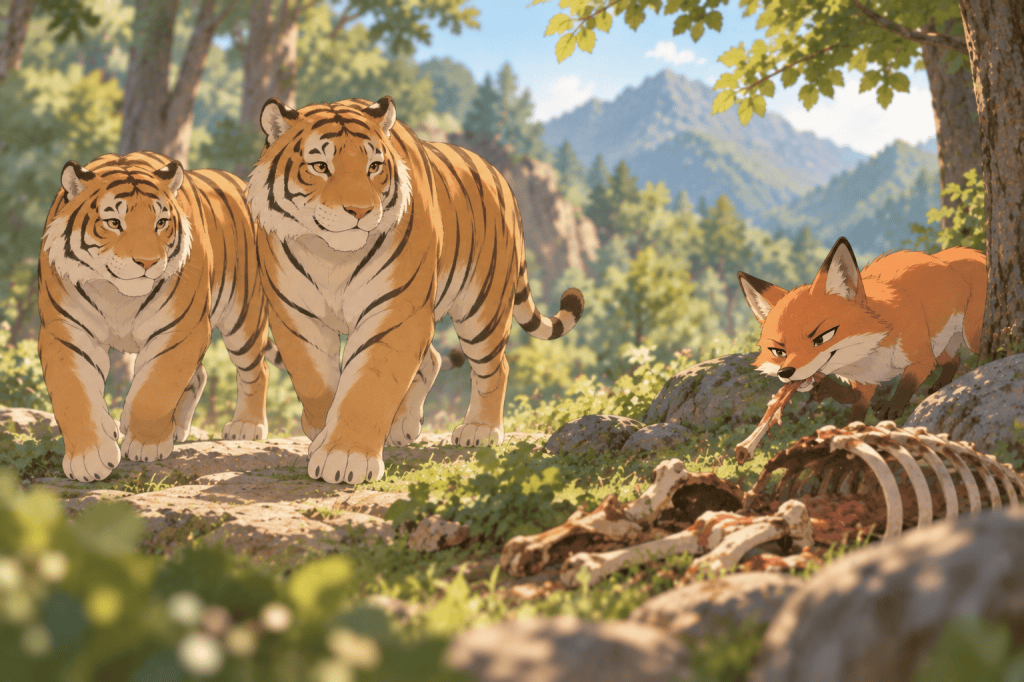
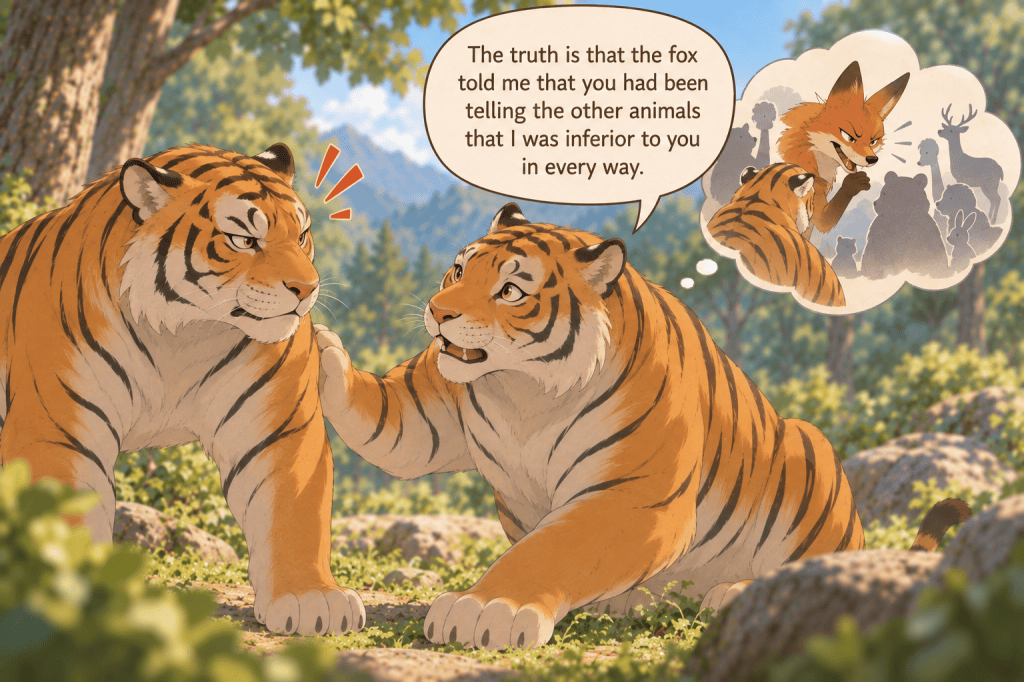
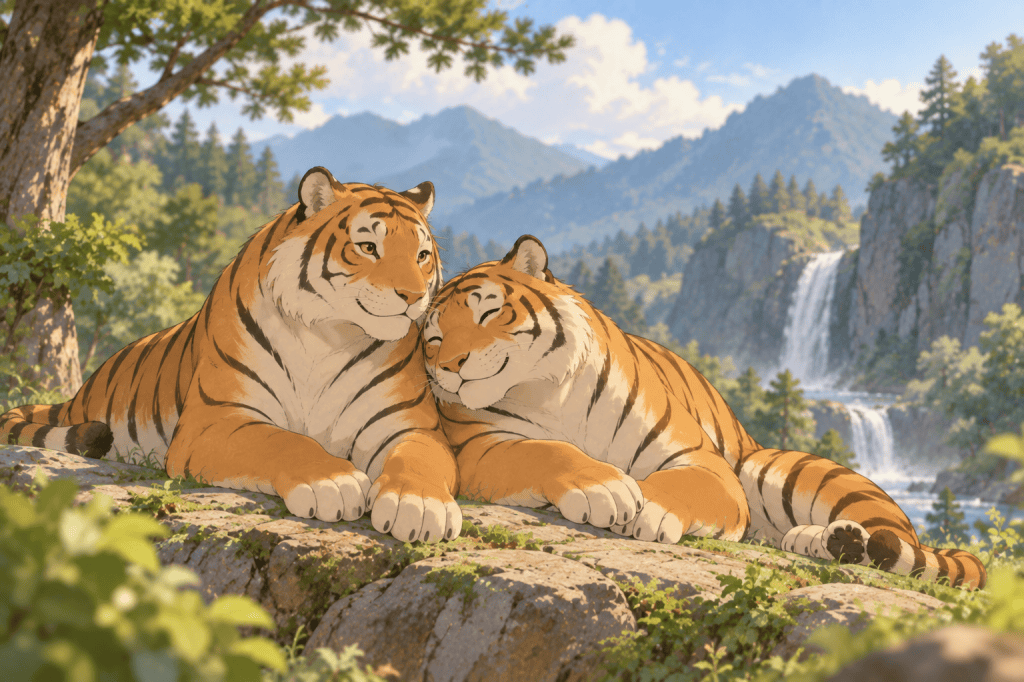
There is a story about two fierce tigers named Shanya and Shanbo who lived deep in the mountains long ago. The two tigers were good friends and lived together in harmony.

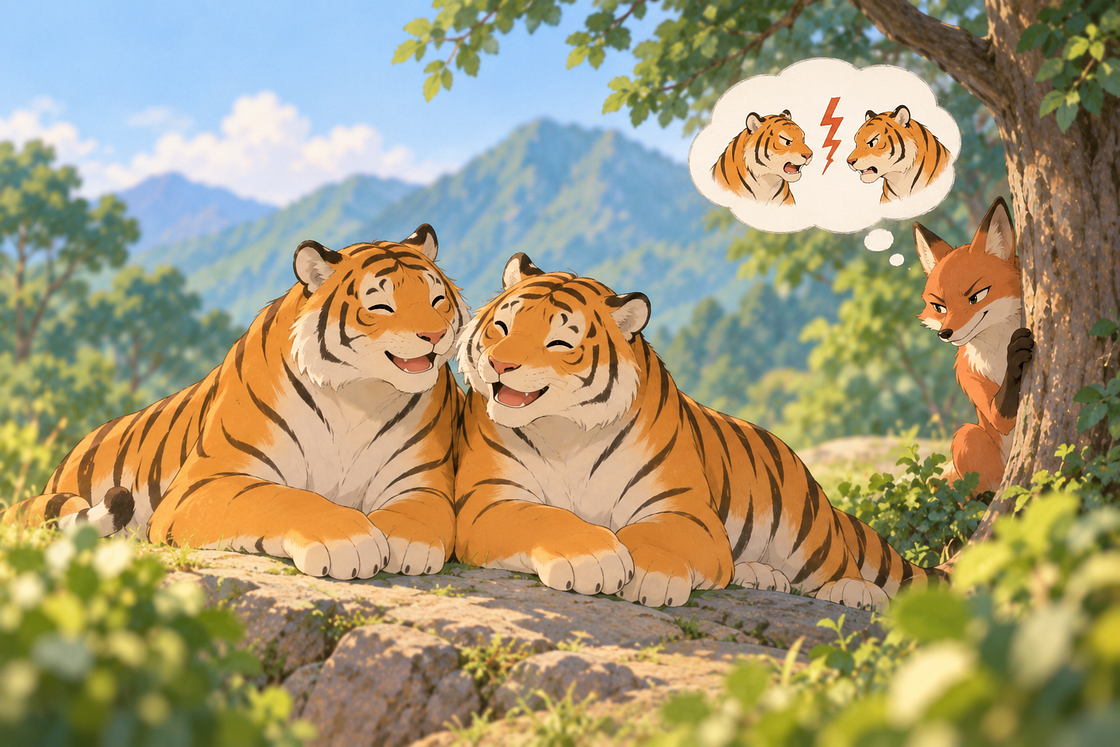
There was also a cunning fox that was lazy, greedy, and deceitful. It survived by scavenging the remains of the prey left behind by the two tigers and followed them around every day.

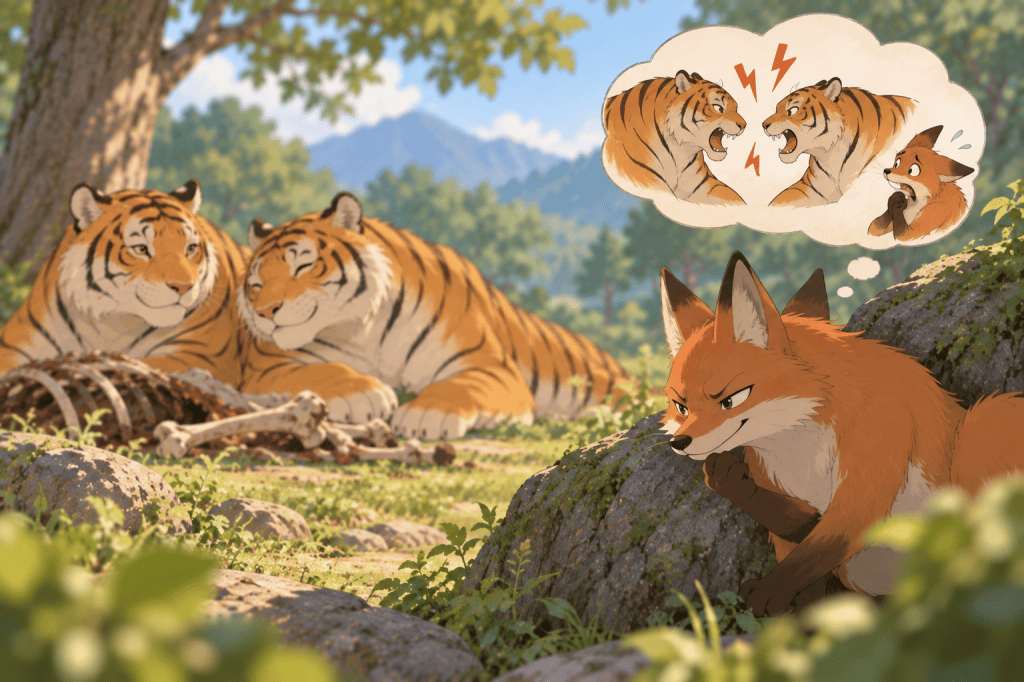
Although the fox depended on the two tigers for survival, it was also extremely afraid of them. It worried that one day, if the tigers failed to catch any prey, they might turn against it, and its very life could be in danger. The fox therefore devised a scheme to sow discord between the two tigers.

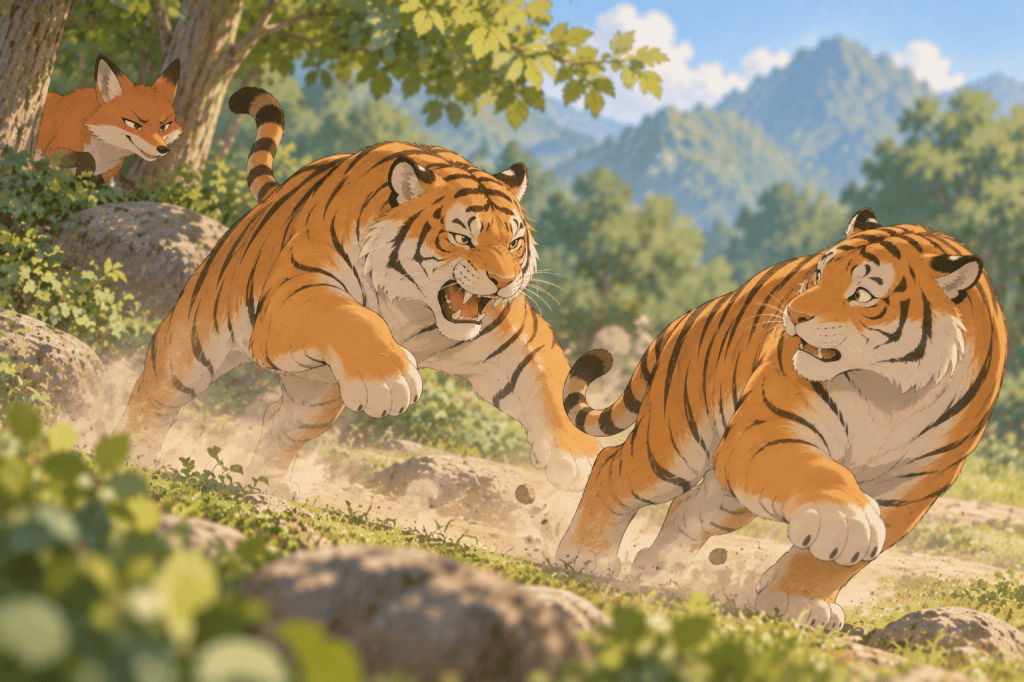
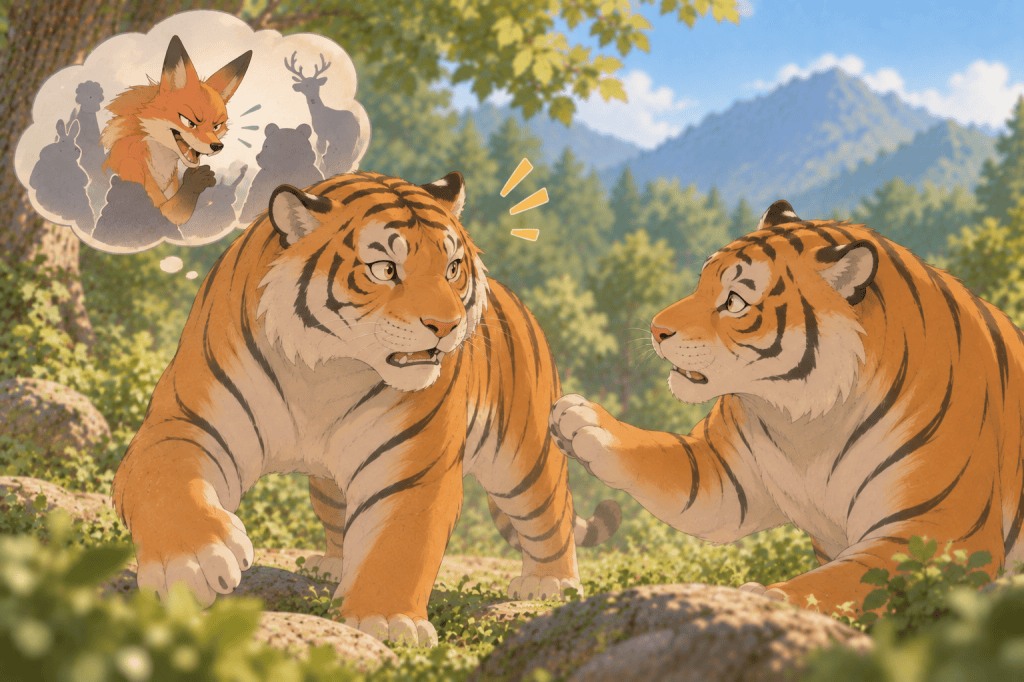
Because of the fox’s instigation, the next time the two tigers met, Shanya attacked Shanbo first.

Shanbo did not immediately fight back. Instead, he chose to retreat.

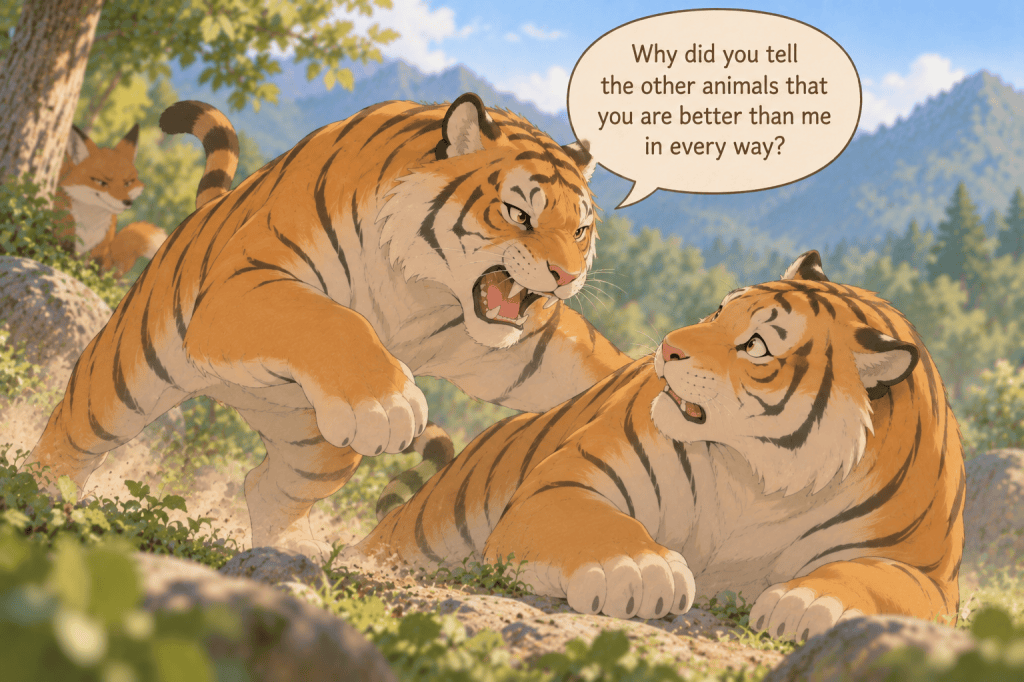
As Shanya continued attacking, he angrily rebuked Shanbo:

“Why did you tell the other animals that you are better than me in every way?”

Upon hearing this, Shanbo realized that something was wrong. He urged Shanya to calm down and explained:

“The truth is that the fox told me that you had been telling the other animals that I was inferior to you in every way.”

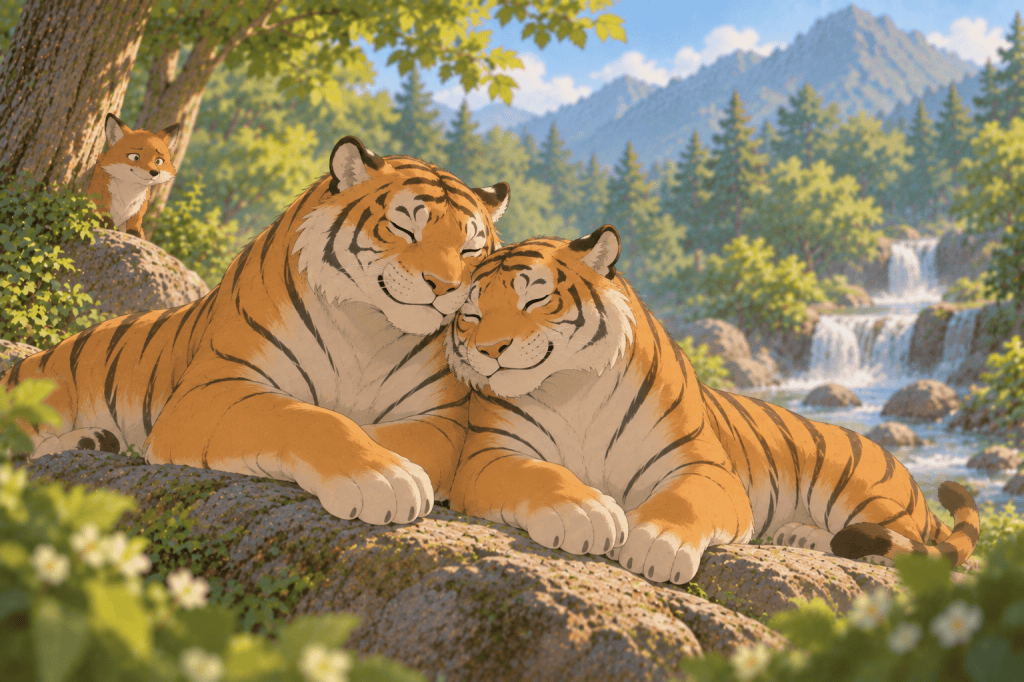
When Shanya heard this, he too realized that something was amiss. He immediately stopped fighting.

The two tigers resolved their misunderstanding and reconciled. From that time onward, they once again lived together peacefully, and tranquility returned to the forest.

The Lesson of the Story

This story teaches us not to readily believe rumors, become attached to disputes over right and wrong, or act impulsively without first understanding the situation. Had Shanbo immediately fought back instead of remaining calm, the fox’s deception could have led to serious consequences.

In our own lives, becoming entangled in arguments over who is right and who is wrong can consume our time and energy, damage relationships, and cause conflicts to escalate. Sometimes, the more we try to prove ourselves right, the more deeply we become entangled in the dispute.

Once we understand that matters of right and wrong are impermanent, we can learn not to let them occupy our hearts. When we refuse to be drawn into unnecessary disputes, they may gradually fade away. In this way, letting go of attachment to right and wrong benefits both ourselves and others.

Author: Duochi
Editor: Qu Yichen

Link:https://hhdorjechangbuddhaiiidharma.com/2026/10/04/%e5%a6%82%e4%bd%95%e5%b0%8d%e5%be%85%e4%b8%8d%e5%ad%b8%e4%bd%9b%e7%9a%84%e5%ae%b6%e4%ba%ba/

#DorjeChangBuddhaIII #Spirituality #Buddha #Buddhism
Do Not Laugh at the Dreams of Youth

Do Not Laugh at the Dreams of Youth

Do Not Laugh at the Dreams of Youth

Do Not Laugh at the Dreams of Youth

Do Not Laugh at the Dreams of Youth

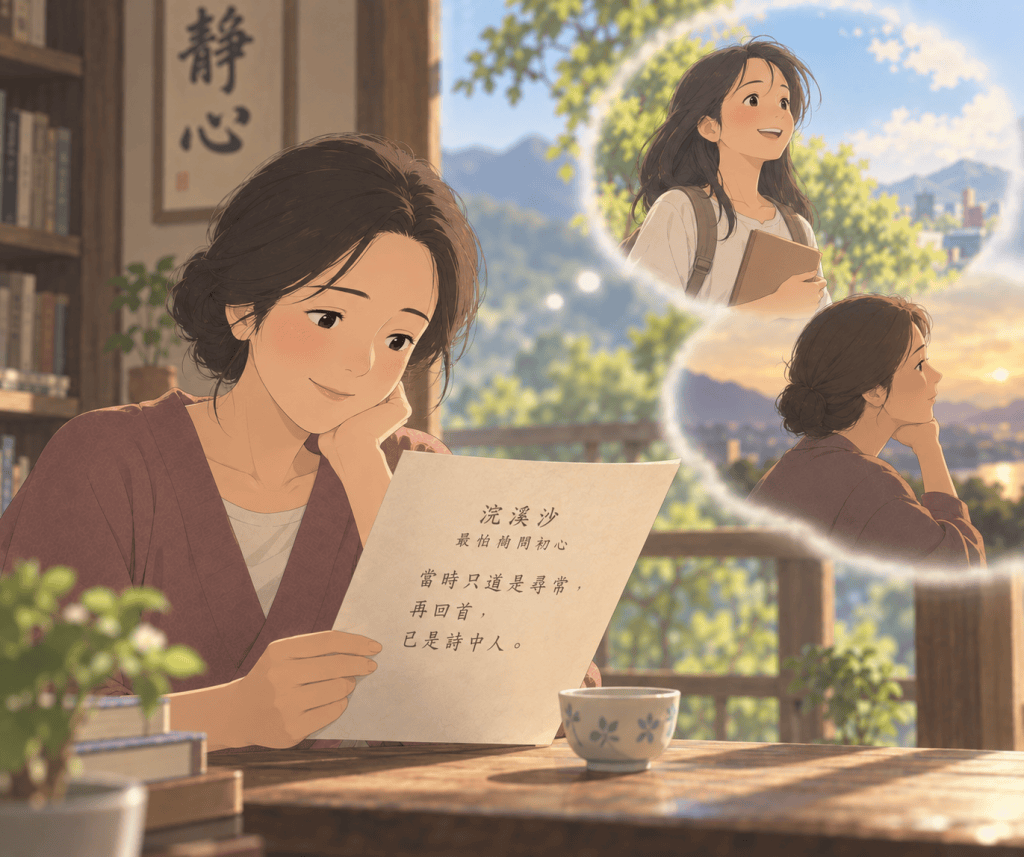
Recently, I happened to come across the poem Huan Xi Sha: What I Fear Most Is Being Asked About My Original Aspirations. Reading it in middle age filled me with countless emotions, and its meaning lingered deeply in my mind. It gave me the feeling that, “When I first heard these words, I did not understand their meaning; when I heard them again, I had already become the person described in them.”

How could these few short lines not be a reflection of the life I am experiencing today?

What I fear most is being asked about my original aspirations,
Only to realize that my dreams have faded into emptiness.

In youth, I aspired to journey three thousand miles,
Yet after hesitating for a hundred steps, I had accomplished nothing.

In the blink of an eye, my parents’ hair has turned white,
While my children, still taking unsteady steps, have begun their schooling.

The need to earn a few pieces of silver hastens the passing of the years.
My heart remains young,
Yet wrinkles have quietly appeared upon my brow.

In this fleeting life, I drink and drift back into dreams.
Youth has passed, though I still feel like the person I once was.
I can only sigh at how swiftly time has flown.

Do Not Laugh at the Dreams of Youth

Zhuangzi said:

“A person’s life between heaven and earth is like a white colt glimpsed through a crack—it passes in an instant.”

Do Not Laugh at the Dreams of Youth

Looking back upon the road we have traveled, we realize that throughout our lives, we have grown, encountered countless people and experiences, and then bid them farewell one after another. Between flowers blooming and falling, countless beautiful moments have already become memories. Amid gains and losses, sorrow and joy, so much of the past has vanished like drifting clouds and smoke.

Do Not Laugh at the Dreams of Youth

As the saying goes:

The green mountains never grow old, yet I never find rest;
All my life, I toil simply to make a living.

After decades of wind and rain,
In the blink of an eye, we may already be buried beneath the earth.

I laugh because the green mountains never change,
The mountains laugh because I have already grown old.
Like an ox that toils into old age, never knowing a day of rest;
By the time rest finally comes, one has already been laid to rest in the mountains.

How many people have lived exactly this way, passing hurriedly through an entire lifetime burdened with regrets and helplessness?

Time always seems to slip away without our noticing, and often we realize its passing only afterward. There are things whose preciousness we understand only after we have completely lost them. Then we cannot stop thinking about them and regret that we did not cherish them when we had the chance.

But the years pass swiftly. How could time ever allow us to remain lost in a dream while our lives quietly grow shorter? Impermanence is the true nature of worldly existence. The past is like tea—only after tasting it do we come to understand how important it is to cherish the present.

Everything in this world that we have decided to do should be acted upon with determination. We should not postpone it until after we have rested for a while, until tomorrow, or until some future opportunity.

Nor should we allow a small setback to make us procrastinate day after day, sighing in discouragement, overwhelmed by worry, and losing our courage. If we allow ourselves to be completely defeated by setbacks, the undertaking can no longer succeed.

Therefore, when we encounter difficulties, we should promptly transform pessimism and negative emotions into strength—and replace hesitation with action.

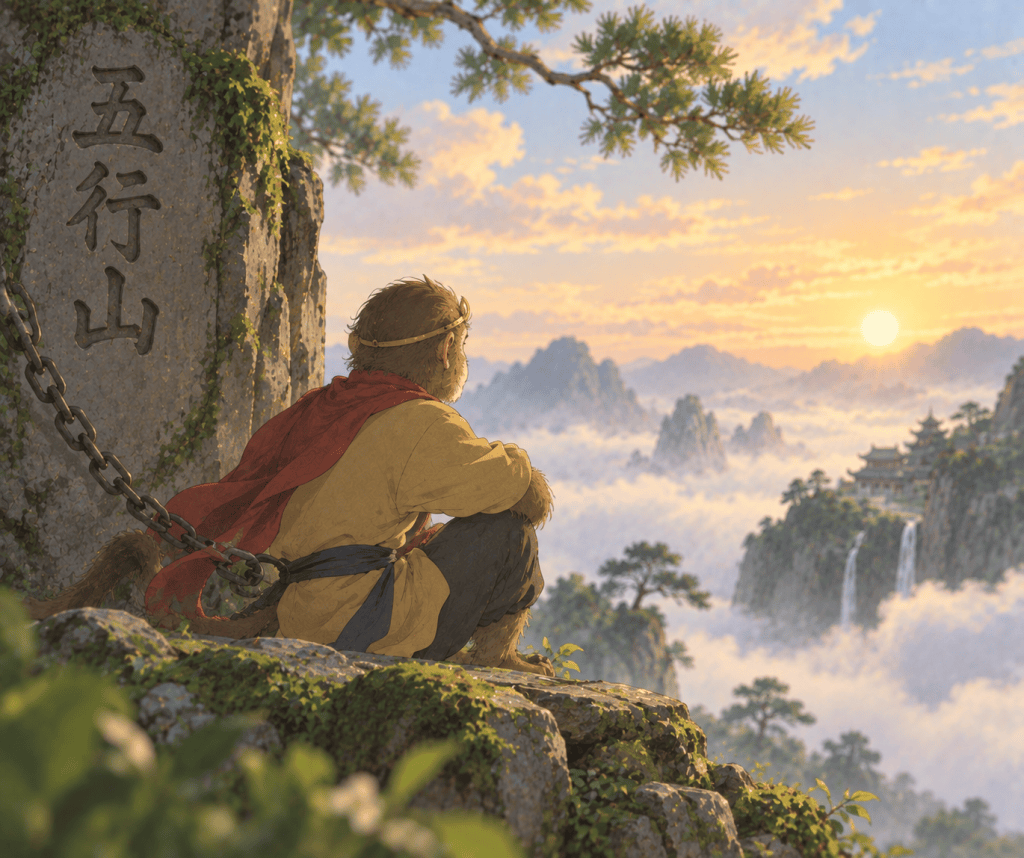
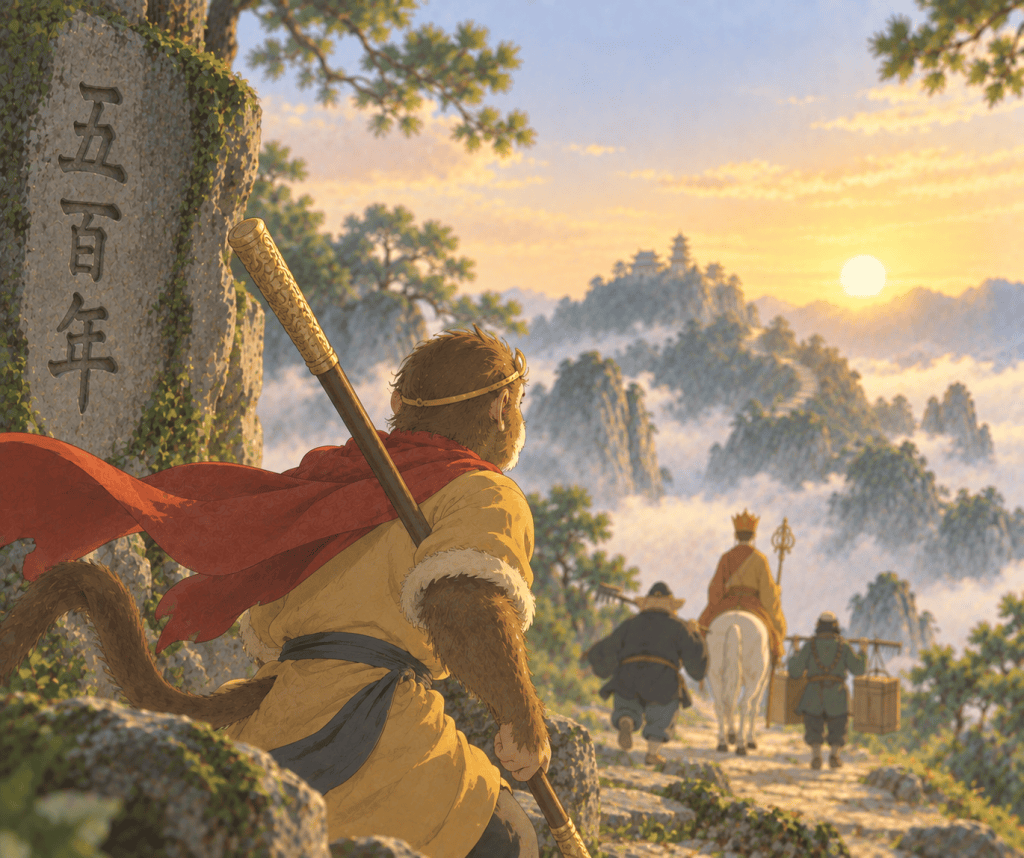
I remember that in Journey to the West, after Sun Wukong, the Monkey King, was imprisoned beneath the Five Elements Mountain, the song Five Hundred Years of Changing Seas and Mulberry Fields expressed the following idea:

Five hundred years—the seas and fields have changed places,
Even the stubborn stone has become covered with moss.
Yet one heart has never died,
Still yearning for freedom.

Even if wildfires burn,
Even if ice and snow cover the earth,
The aspiration remains unchanged,
And faith remains unshaken.

Was it not precisely because Sun Wukong endured five hundred years of hardship without allowing his determination and longing for freedom to be extinguished that he ultimately had the opportunity to embark upon the journey to obtain the Buddhist scriptures?

Namo H.H. Dorje Chang Buddha III taught:

Once you are set to achieve a goal, pursue it with doggedness and refuse to be distracted by anything deceptively attractive. A mountain climber should not stop to pick leaves and branches on the way, or he will never reach the top. This applies to everything.

The Buddha clearly teaches us here that once a person has made a specific and proper vow and established a goal, that person should strive to bring it to fulfillment and work diligently to turn that aspiration into reality. One must not become distracted by illusory circumstances encountered along the way and consequently stop moving forward.

Those who aspire to accomplish a great undertaking and ultimately reach the summit must not waste their time plucking leaves and grasping branches halfway up the mountain. Nor should they allow themselves to be detained by an illusory city, becoming content with having reached it and no longer wishing to continue.

Do Not Laugh at the Dreams of Youth

If we stop at such an illusory city, we will never accomplish our ultimate goal, nor will we ever reach the summit.

Life continually presents us with challenges, and we learn to deal with each one as it comes. The setting sun sinks into the mountains and sea; Within them lies a profound meaning.

Looking back, we may suddenly realize that, without even noticing it, we have already endured and overcome many hardships. Through them, we have become people who can gradually heal ourselves even while struggling through moments when everything seems to be falling apart.

No matter how many setbacks we encounter or how much suffering we must endure, as long as our minds do not become attached and we face circumstances with calmness and composure, even the greatest difficulties can eventually be faced and overcome.

Author: Fuyao Zhishang

Link: https://hhdorjechangbuddhaiiidharma.com/2026/09/27/do-not-laugh-at-the-dreams-of-youth/

#DorjeChangBuddhaIII #Spirituality #Buddha #Buddhism
How Great Is the Power of One Person?

How Great Is the Power of One Person?

How Great Is the Power of One Person?

How Great is the Power of One Person

Namo H.H. Dorje Chang Buddha III once expounded the Dharma:

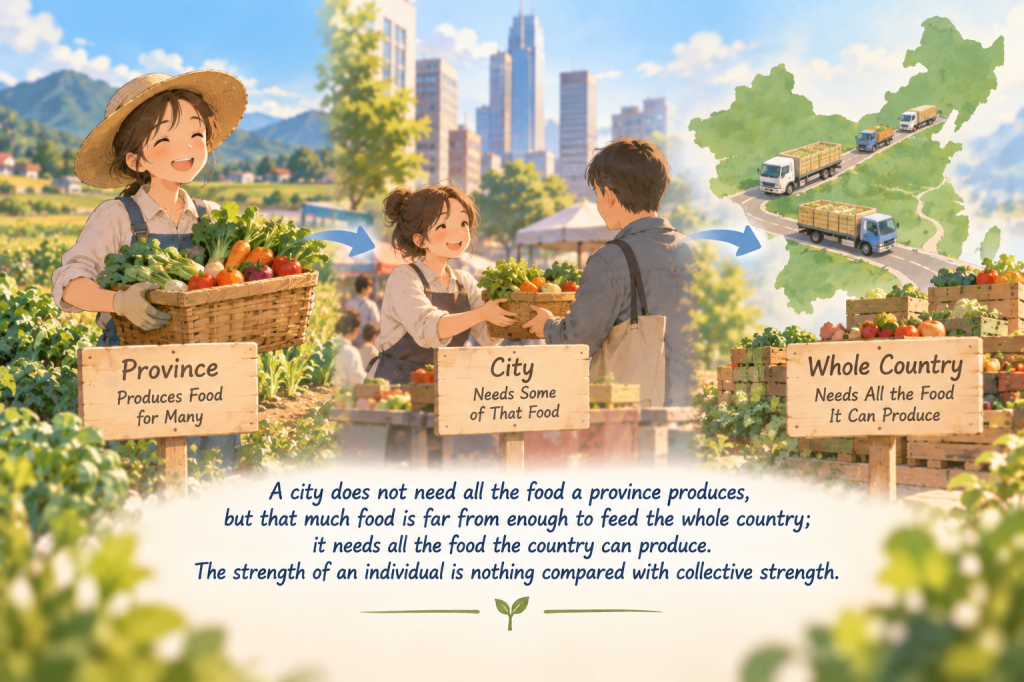
“A city does not need all the food a province produces, but that much food is far from enough to feed the whole country; it needs all the food the country can produce. The strength of an individual is nothing compared with collective strength.”

The meaning of this principle is that the size, corresponding energy, and function of all things in the world are relative and can be understood through comparison. Without comparison, we cannot discern what is large or small, nor can we understand the principles governing their appropriate application.

For example, if the farmland of an entire province were used to support only one city, it would seem vast and abundant. However, if an entire country had to depend on the farmland of just that one province, it would be insufficient to meet the needs of its people. Thus, the people of a nation require the land and resources of a nation to sustain them.

This illustrates an important principle: No matter how powerful an individual may be, and no matter how great that person’s abilities or talents are, the power of one person is ultimately limited. Only when the strength of many people is brought together can truly great power arise.

How can we better understand this principle? Let us consider several examples from everyday life.

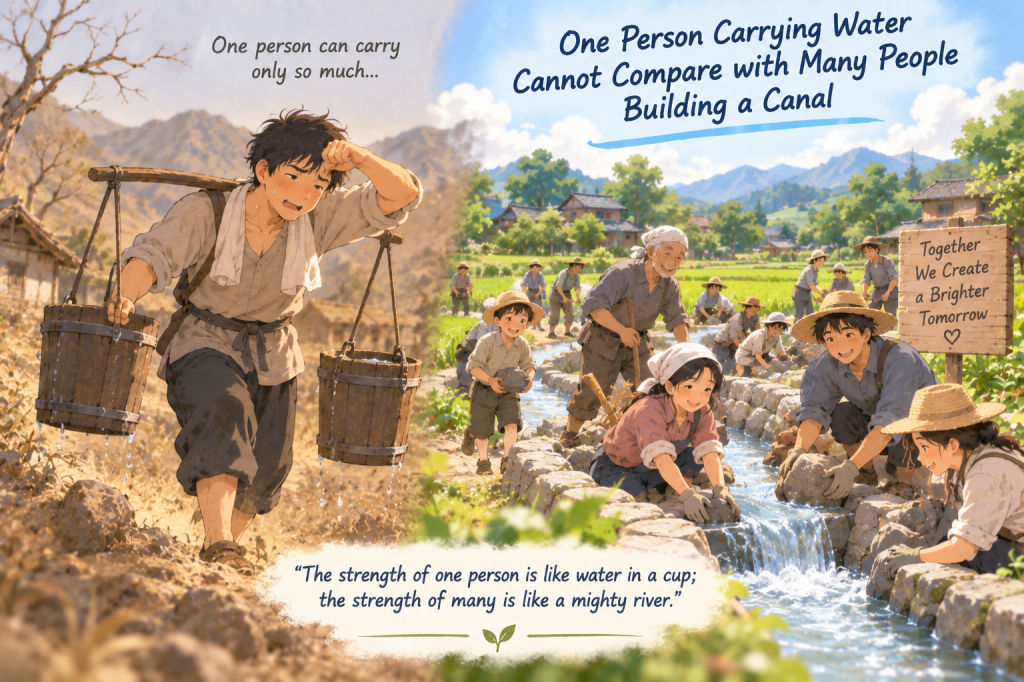
One Person Carrying Water Cannot Compare with Many People Building a Canal

Long ago, there was a mountain village that suffered from drought year after year. A remarkably strong man in the village could carry fifty loads of water each day, enough to support his own household and several neighboring families. The villagers praised him for his extraordinary strength.

But when a severe drought struck and hundreds of villagers desperately needed water, even his great strength was of little help. He broke his carrying pole and wore his shoulders raw, yet he still could not provide enough water for everyone.

Eventually, all the villagers—men and women, young and old—joined together to dig a canal, divert water, and build stone embankments. Three months later, clear water flowed into the village, and barren hillsides were transformed into fertile farmland.

The strong man sighed with realization:

“The strength of one person is like water in a cup; the strength of many is like a mighty river.”

Working Alone Cannot Compare with Advancing as a Team

At a technology company, there was a brilliant developer who independently created a piece of software with industry-leading performance. However, customers soon requested more than a hundred customized requirements. Despite working day and night, he was able to complete only a fraction of them.

The company later assembled a team. Some members specialized in interface design, others optimized algorithms, while still others communicated directly with customers. Within only three months, the team released multiple improved versions, and the company’s market share tripled.

The talented developer became thoroughly convinced of the power of teamwork:

“No matter how fast one person can run, he cannot outrun the wheels of a team moving together.”

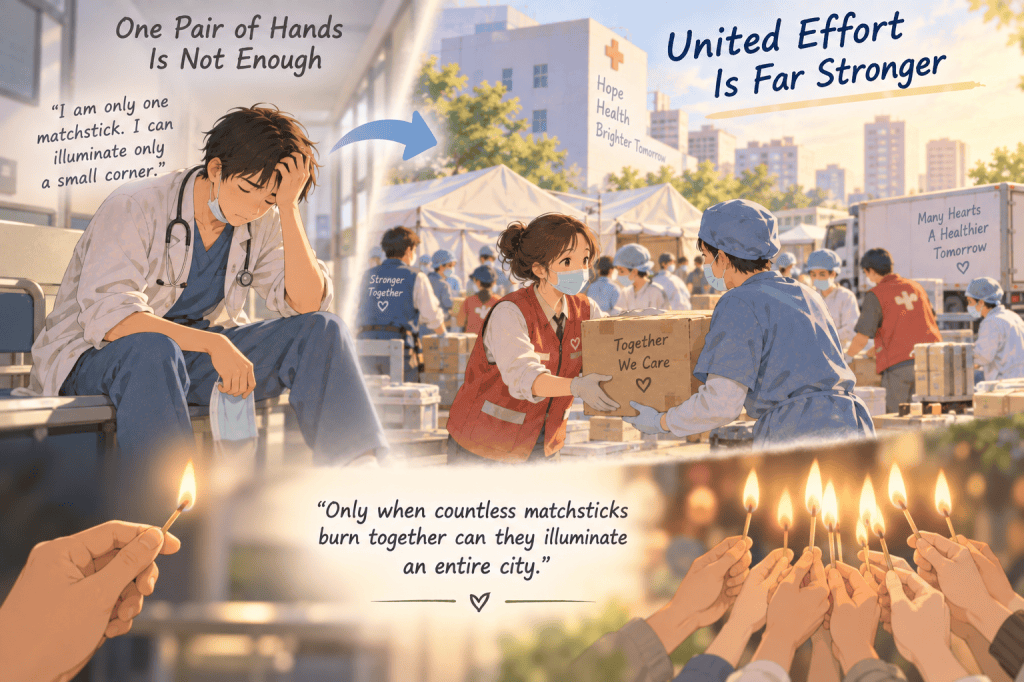
One Pair of Hands Is Not Enough; United Effort Is Far Stronger

“I am only one matchstick. I can illuminate only a small corner.”

This was the realization of a doctor who collapsed from exhaustion during an epidemic. He had worked continuously for 72 hours, treating dozens of patients, and people called him an “iron man.”

But when the number of infections surged into the thousands, his strength finally gave out, and he collapsed beside a hospital bed.

Soon afterward, medical workers, volunteers, logistics personnel, and community workers arrived from across the country in great numbers. Together, they built temporary medical facilities, delivered essential supplies, conducted screenings, and eventually brought the outbreak under control.

Reflecting on this, the doctor said:

“Only when countless matchsticks burn together can they illuminate an entire city.”

No matter how strong one person may be, that individual cannot surpass the strength created when many hearts unite. A single drop of water may seem insignificant, but countless drops come together to form an ocean. A handful of earth may seem inconsequential, but countless handfuls can rise into a mountain.

The principle expressed by the Buddha in the words, “A city does not need all the food a province produces, but that much food is far from enough to feed the whole country,” teaches us precisely this: the strength of an individual will eventually reach its limit, but when the strength of many is united, tremendous power can arise.

Yet if we wish to investigate more deeply and seek greater truths, we should seek them within the True Buddha Dharma expounded by Namo H.H. Dorje Chang Buddha III.

Alone, one may travel quickly; together, many can travel far.
The strength of one is limited; the strength of many is great.

May we cherish the light that each individual can offer while also understanding the importance of bringing together the flames of many. With our actions and with our hearts, may we put into practice the path of benefiting others.

By Yijie Xueren

How Great Is the Power of One Person?

Link: https://hhdorjechangbuddhaiiidharma.com/2026/09/14/how-great-is-the-power-of-one-person/

#DorjeChangBuddhaIII #Spirituality #Buddha #Buddhism