Do Not Laugh at the Dreams of Youth

Do Not Laugh at the Dreams of Youth

Do Not Laugh at the Dreams of Youth

Do Not Laugh at the Dreams of Youth

Do Not Laugh at the Dreams of Youth

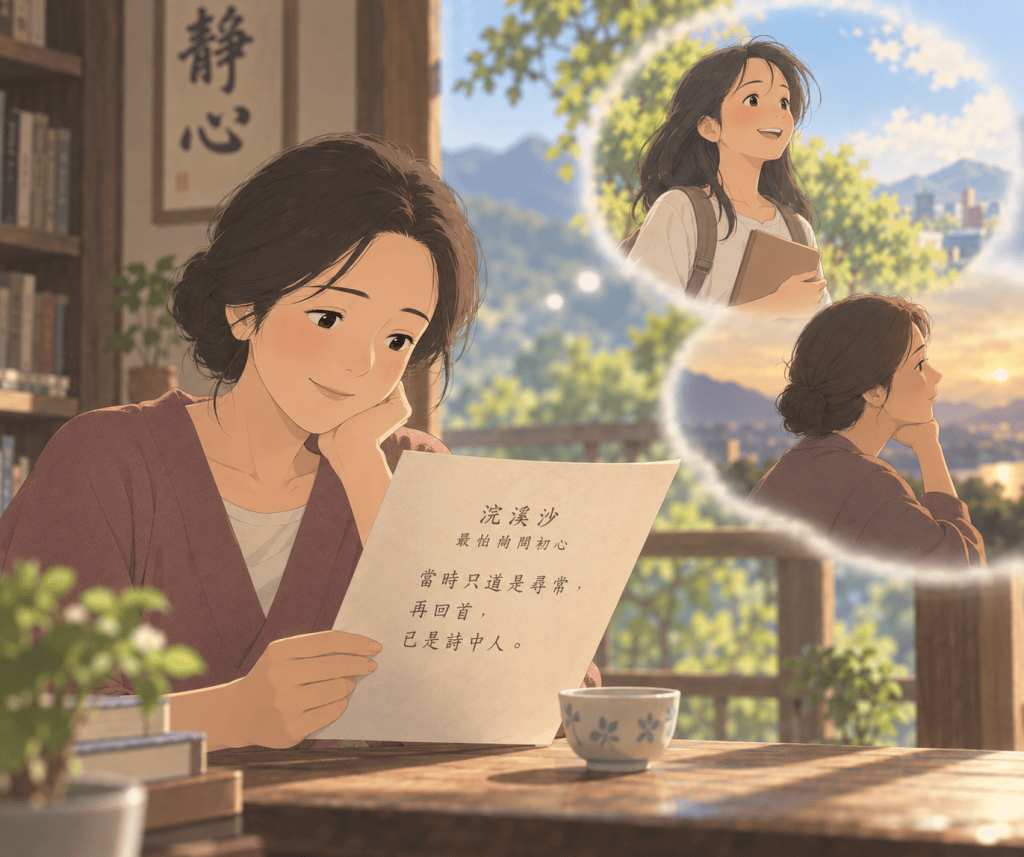
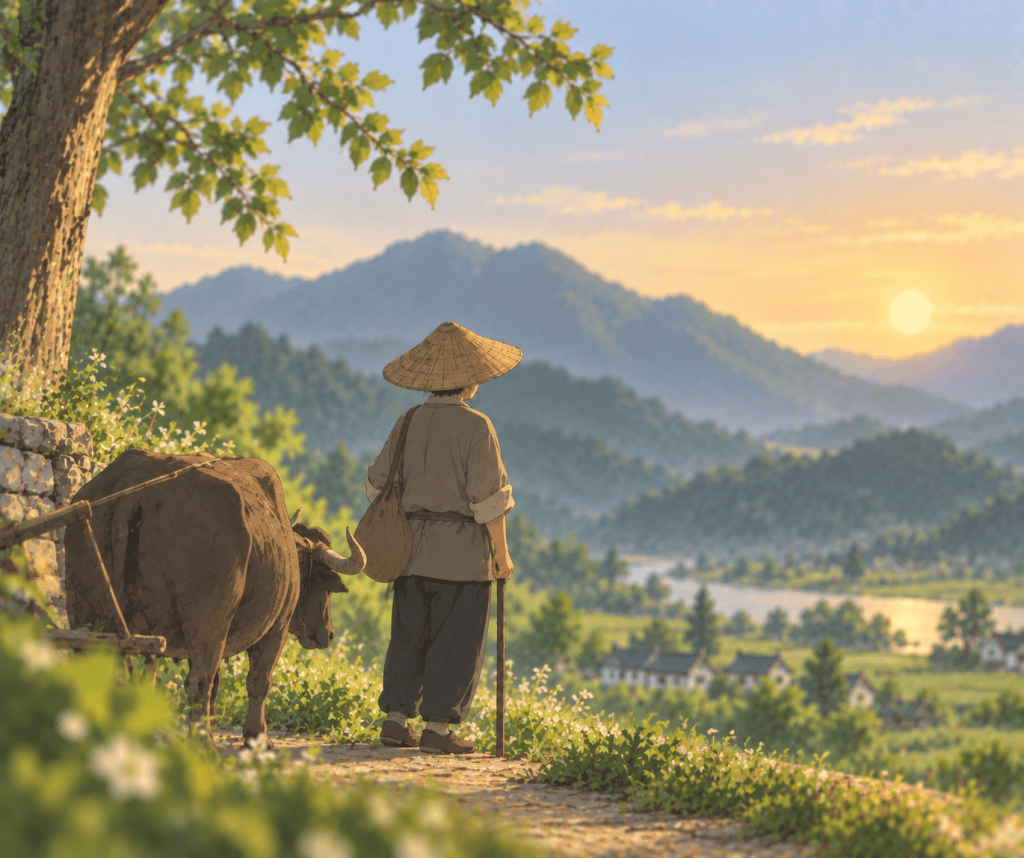
Recently, I happened to come across the poem Huan Xi Sha: What I Fear Most Is Being Asked About My Original Aspirations. Reading it in middle age filled me with countless emotions, and its meaning lingered deeply in my mind. It gave me the feeling that, “When I first heard these words, I did not understand their meaning; when I heard them again, I had already become the person described in them.”

How could these few short lines not be a reflection of the life I am experiencing today?

What I fear most is being asked about my original aspirations,
Only to realize that my dreams have faded into emptiness.

In youth, I aspired to journey three thousand miles,
Yet after hesitating for a hundred steps, I had accomplished nothing.

In the blink of an eye, my parents’ hair has turned white,
While my children, still taking unsteady steps, have begun their schooling.

The need to earn a few pieces of silver hastens the passing of the years.
My heart remains young,
Yet wrinkles have quietly appeared upon my brow.

In this fleeting life, I drink and drift back into dreams.
Youth has passed, though I still feel like the person I once was.
I can only sigh at how swiftly time has flown.

Do Not Laugh at the Dreams of Youth

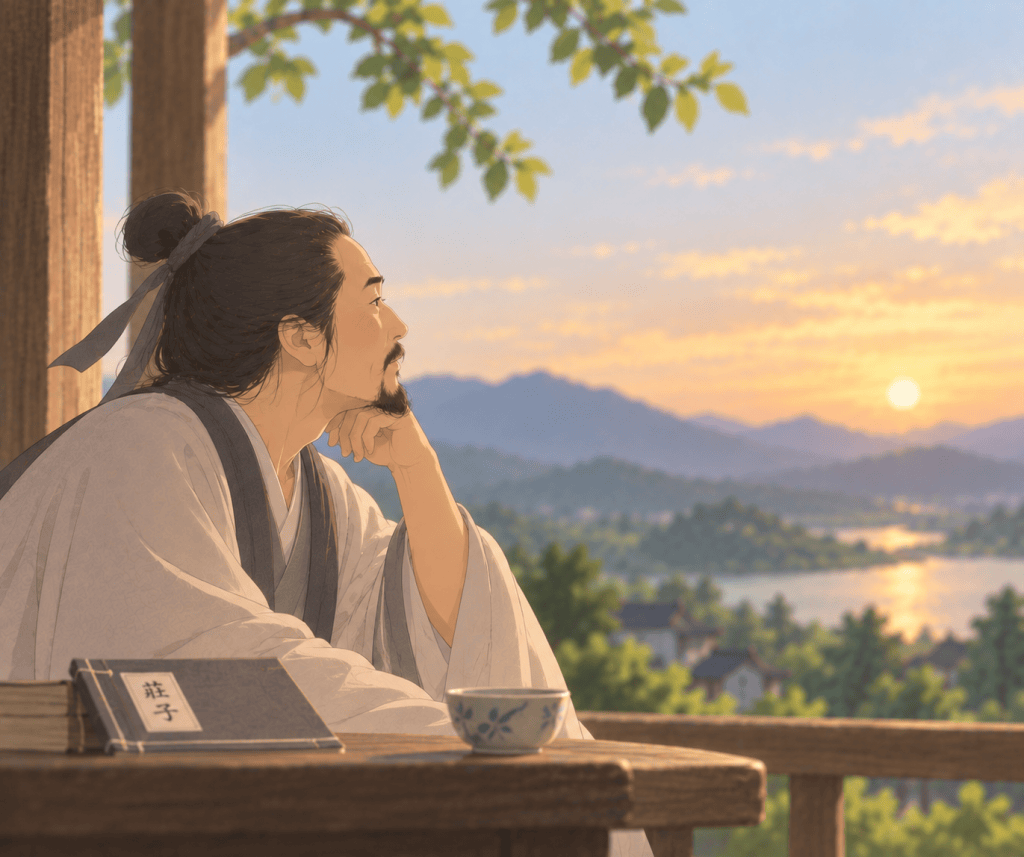
Zhuangzi said:

“A person’s life between heaven and earth is like a white colt glimpsed through a crack—it passes in an instant.”

Do Not Laugh at the Dreams of Youth

Looking back upon the road we have traveled, we realize that throughout our lives, we have grown, encountered countless people and experiences, and then bid them farewell one after another. Between flowers blooming and falling, countless beautiful moments have already become memories. Amid gains and losses, sorrow and joy, so much of the past has vanished like drifting clouds and smoke.

Do Not Laugh at the Dreams of Youth

As the saying goes:

The green mountains never grow old, yet I never find rest;
All my life, I toil simply to make a living.

After decades of wind and rain,
In the blink of an eye, we may already be buried beneath the earth.

I laugh because the green mountains never change,
The mountains laugh because I have already grown old.
Like an ox that toils into old age, never knowing a day of rest;
By the time rest finally comes, one has already been laid to rest in the mountains.

How many people have lived exactly this way, passing hurriedly through an entire lifetime burdened with regrets and helplessness?

Time always seems to slip away without our noticing, and often we realize its passing only afterward. There are things whose preciousness we understand only after we have completely lost them. Then we cannot stop thinking about them and regret that we did not cherish them when we had the chance.

But the years pass swiftly. How could time ever allow us to remain lost in a dream while our lives quietly grow shorter? Impermanence is the true nature of worldly existence. The past is like tea—only after tasting it do we come to understand how important it is to cherish the present.

Everything in this world that we have decided to do should be acted upon with determination. We should not postpone it until after we have rested for a while, until tomorrow, or until some future opportunity.

Nor should we allow a small setback to make us procrastinate day after day, sighing in discouragement, overwhelmed by worry, and losing our courage. If we allow ourselves to be completely defeated by setbacks, the undertaking can no longer succeed.

Therefore, when we encounter difficulties, we should promptly transform pessimism and negative emotions into strength—and replace hesitation with action.

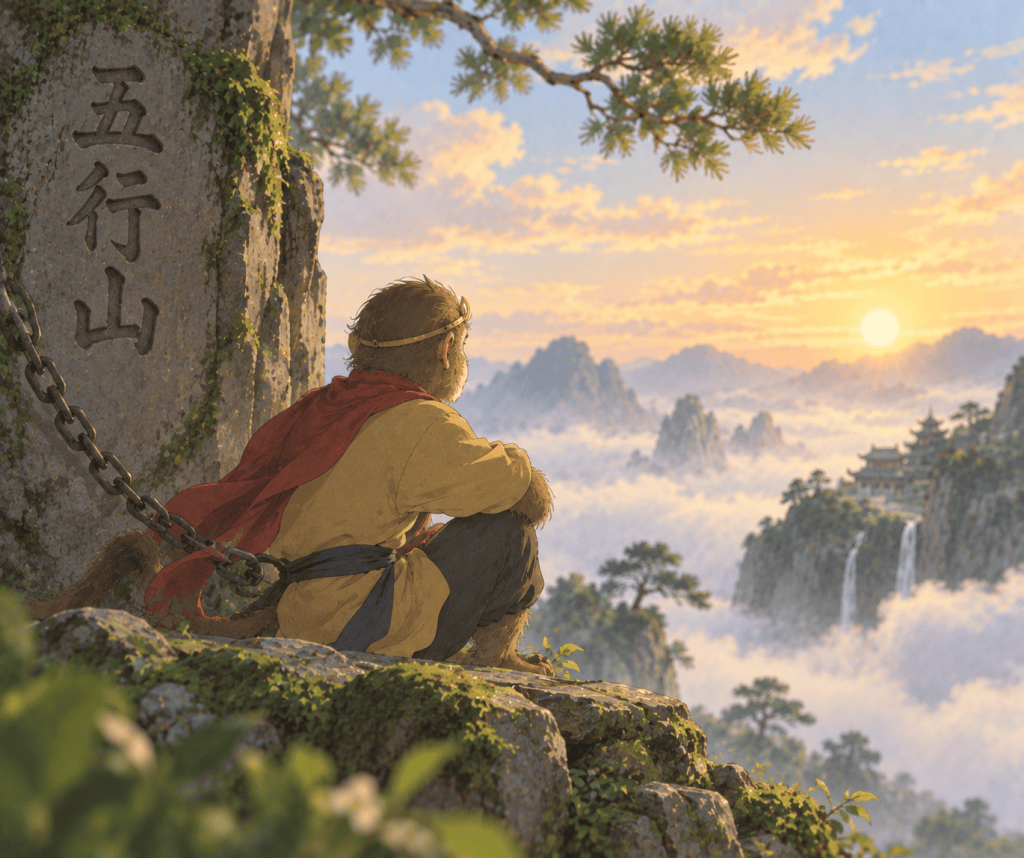
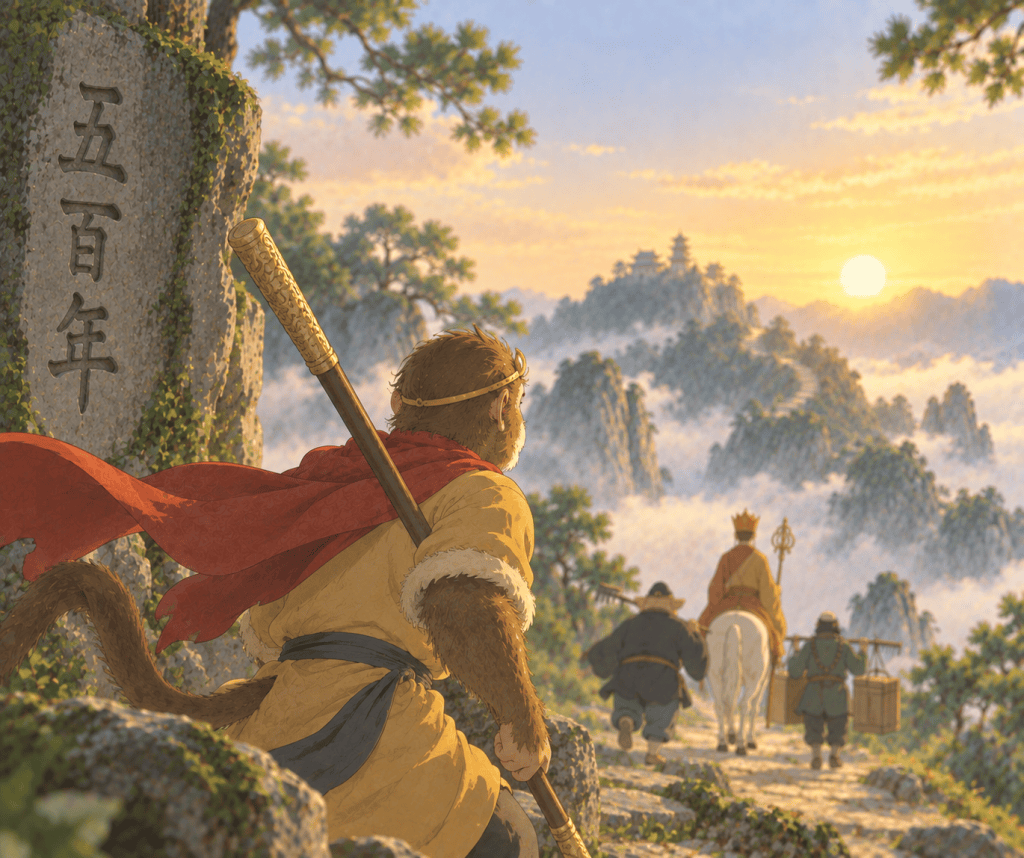
I remember that in Journey to the West, after Sun Wukong, the Monkey King, was imprisoned beneath the Five Elements Mountain, the song Five Hundred Years of Changing Seas and Mulberry Fields expressed the following idea:

Five hundred years—the seas and fields have changed places,
Even the stubborn stone has become covered with moss.
Yet one heart has never died,
Still yearning for freedom.

Even if wildfires burn,
Even if ice and snow cover the earth,
The aspiration remains unchanged,
And faith remains unshaken.

Was it not precisely because Sun Wukong endured five hundred years of hardship without allowing his determination and longing for freedom to be extinguished that he ultimately had the opportunity to embark upon the journey to obtain the Buddhist scriptures?

Namo H.H. Dorje Chang Buddha III taught:

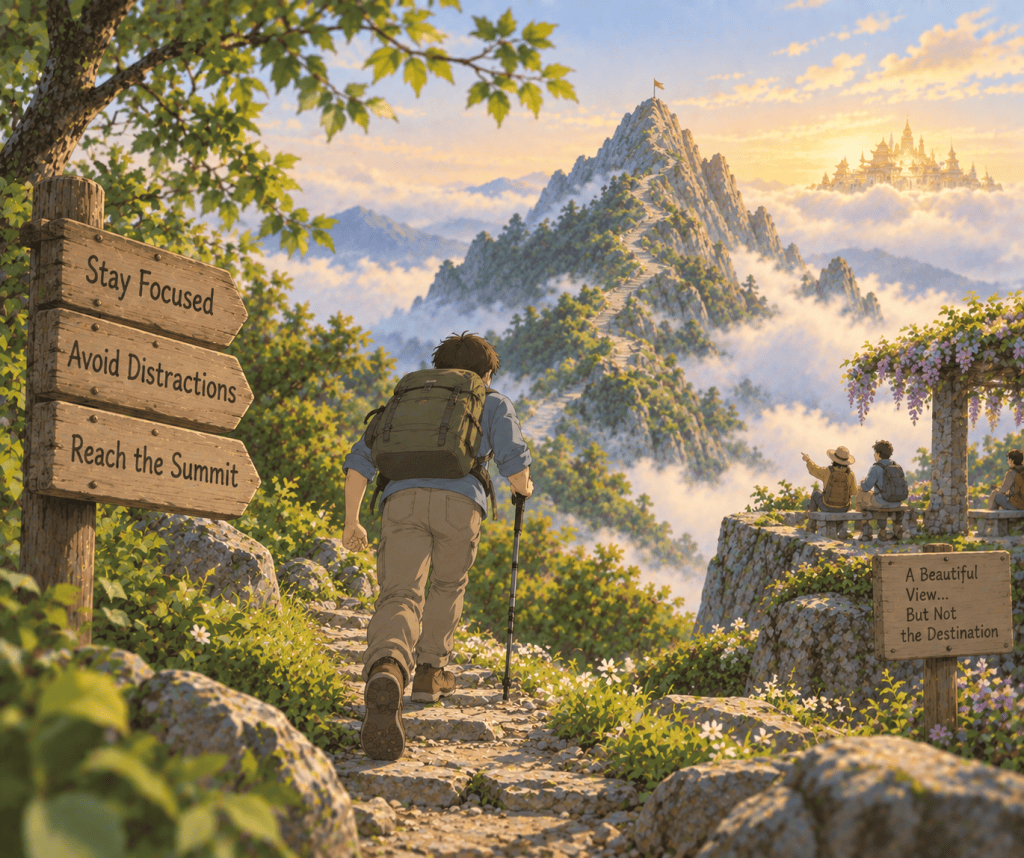
Once you are set to achieve a goal, pursue it with doggedness and refuse to be distracted by anything deceptively attractive. A mountain climber should not stop to pick leaves and branches on the way, or he will never reach the top. This applies to everything.

The Buddha clearly teaches us here that once a person has made a specific and proper vow and established a goal, that person should strive to bring it to fulfillment and work diligently to turn that aspiration into reality. One must not become distracted by illusory circumstances encountered along the way and consequently stop moving forward.

Those who aspire to accomplish a great undertaking and ultimately reach the summit must not waste their time plucking leaves and grasping branches halfway up the mountain. Nor should they allow themselves to be detained by an illusory city, becoming content with having reached it and no longer wishing to continue.

Do Not Laugh at the Dreams of Youth

If we stop at such an illusory city, we will never accomplish our ultimate goal, nor will we ever reach the summit.

Life continually presents us with challenges, and we learn to deal with each one as it comes. The setting sun sinks into the mountains and sea; Within them lies a profound meaning.

Looking back, we may suddenly realize that, without even noticing it, we have already endured and overcome many hardships. Through them, we have become people who can gradually heal ourselves even while struggling through moments when everything seems to be falling apart.

No matter how many setbacks we encounter or how much suffering we must endure, as long as our minds do not become attached and we face circumstances with calmness and composure, even the greatest difficulties can eventually be faced and overcome.

Author: Fuyao Zhishang

Link: https://hhdorjechangbuddhaiiidharma.com/2026/09/27/do-not-laugh-at-the-dreams-of-youth/

#DorjeChangBuddhaIII #Spirituality #Buddha #Buddhism
It Is Time to Truly Wake Up

It Is Time to Truly Wake Up

It Is Time to Truly Wake Up

After respectfully listening to the Dharma discourse “Focusing Primarily on Cultivating One’s Own Dharma and Conduct” imparted by Namo H.H. Dorje Chang Buddha III, I came to a profound realization: It is time to truly wake up!

I am deeply grateful for the blessings of all Buddhas and Bodhisattvas!

Although I had listened to this Dharma discourse before, it seemed to have left almost no impression on me. Just as my Buddha Master said, it went in one ear and out the other. As soon as I finished listening, I forgot what I had heard. The teachings neither entered my mind nor touched my heart. I am truly ashamed of myself.

After listening to this Dharma discourse again, I came to understand more deeply the preciousness of Buddha Dharma, the true meaning of liberation, and how I should make use of my limited lifetime.

First, we must understand that Buddha Dharma is extremely precious and difficult to encounter. Why? Because only Buddha Dharma can enable us to end the cycle of birth and death and transcend the six realms of samsara in which we now exist.

In the past, when Dharma Master Nenghai listened to Geshe Jangba expound the Dharma, he could hear only one sentence each day and had to make a round trip of about 25 miles. It took him half a year to finish listening to that Dharma teaching.

There are also many people who learn Buddhism by studying Buddhist scriptures. Because many scriptures are written in classical Chinese, their meanings can be very difficult to understand. Even when someone can understand the words, the scriptures were compiled by the Five Hundred Arhats based on their recollections of the Dharma expounded by Namo Shakyamuni Buddha. Therefore, deviations in the meaning of the Dharma could inevitably have occurred, and what was recorded may not fully convey the perfect Dharma meaning spoken by the Buddha.

Today, we are able to listen directly to the perfect Dharma teachings of unsurpassed, complete enlightenment expounded by my Buddha Master(H.H. Dorje Chang Buddha III). This is truly rare, precious, and extraordinarily auspicious!

When my Buddha Master (H.H. Dorje Chang Buddha III)expounds the Dharma, profound principles are explained in simple and accessible language, almost like having an everyday conversation. Deep principles of Buddha Dharma are presented to us clearly and understandably, enabling people of different levels of good roots to gain understanding according to their capacities.

Therefore, we must cherish every opportunity to listen to the Dharma!

Second, we must understand how swiftly impermanence can arrive. How much time do I really have left to waste? Impermanence can take my life at any moment, for death makes no distinction between the young and the old.

Since I have already encountered the true Dharma of H.H. Dorje Chang Buddha III, I must make good use of my time and genuinely cultivate myself according to the Dharma principles taught by my Buddha Master. I must integrate Buddha Dharma into my everyday life.

At every moment, I should recall the Dharma principles taught by H.H. Dorje Chang Buddha III and use them to examine my every word, action, and thought:

Do I truly have compassion?

Have I practiced patience and forbearance?

Have I let go of greed, anger, and ignorance?

Am I still entangled in worldly grievances and disputes over right and wrong?

Are the things I am doing bringing me step by step closer to accomplishment and liberation?

A human existence endowed with the freedoms and favorable conditions for learning the Dharma is difficult to obtain. Even more difficult is the opportunity to hear directly from H.H. Dorje Chang Buddha III the perfect Dharma teachings that enable living beings to end the cycle of birth and death!

All worldly phenomena are illusory and ultimately unreal. What, then, is there to cling to?

Isn’t that true?

The people and possessions I cherish most, everything I have worked so hard to obtain—I carefully protect them, constantly afraid that I might lose them. Joy, worry, and anxiety accompany me all the time.

But has this attachment really brought me happiness?

Is this truly the happiness I have always longed for?

Have I actually obtained it?

At the very moment I take my last breath, will any of these things still belong to me?

Therefore, I must clearly establish the true goal of my life: to end the cycle of birth and death and attain liberation.

On the path toward liberation, I must not keep looking around—admiring the scenery here one moment and envying someone else’s treasures the next. Doing so only delays my journey and wastes my precious life and time.

Cultivation means cultivating oneself.

I must listen to the Dharma teachings frequently, and whenever I understand even one principle, I should put it into practice through my actions, speech, and thoughts—the three karmas.

I must constantly examine myself:

Have I let go of greed, anger, and ignorance?

Am I practicing the Six Paramitas and the myriad Bodhisattva practices?

I should begin with the people closest to me. It is in front of those closest to us that we remove our disguises and reveal our true selves. In those relationships, all our shortcomings are exposed most clearly.

I asked myself sincerely: Am I truly compassionate toward my family?

Suppose I have just finished mopping the floor, and suddenly a large footprint appears on the spotless surface. At that very instant, anger and irritation arise within me. I glare angrily at the person responsible, only to receive a casual response:

“Just wipe it again. What’s the big deal?”

Not only was my effort unappreciated, but I also felt that it had been disrespected. My anger immediately intensified, and I raised my voice:

“Why don’t you clean it yourself?”

Such a trivial incident exposed the selfishness within me.

First, my effort was not truly selfless. I expected praise and respect in return. Second, I lacked tolerance and understanding. When someone failed to respect the results of my labor, instead of responding with compassion and patience, I gave rise to anger and resentment.

At the root of the problem was my failure to truly understand the impermanence of all phenomena. I had failed to realize that I should be selfless, compassionate, and forbearing, and that I should do only those things that benefit others.

Instead, I had neglected what was truly important while clinging to things that offered no help whatsoever toward my accomplishment and liberation—my pride, my dignity, my boundaries, and so on.

It is truly time for me to wake up completely.

I must make full use of this limited lifetime, take my Buddha Master (H.H. Dorje Chang Buddha III) as my role model, establish unwavering faith, rely upon correct understanding and correct views, and diligently cultivate my own conduct and practice my own Dharma.

I will strive to end the cycle of birth and death and attain liberation as soon as possible.

Written by: Qingxin
Edited by: Sayi

Learn more about H.H. Dorje Chang Buddha III

Link: https://hhdorjechangbuddhaiiidharma.com/2026/09/20/it-is-time-to-truly-wake-up/

#DorjeChangBuddhaIII #MasterWanKoYee #BuddhaDharma #BuddhistTeachings #Buddhism #BuddhistCultivation #DharmaTeachings #BuddhistPractice #SpiritualAwakening #BuddhistWisdom

How Great Is the Power of One Person?

How Great Is the Power of One Person?

How Great Is the Power of One Person?

How Great is the Power of One Person

Namo H.H. Dorje Chang Buddha III once expounded the Dharma:

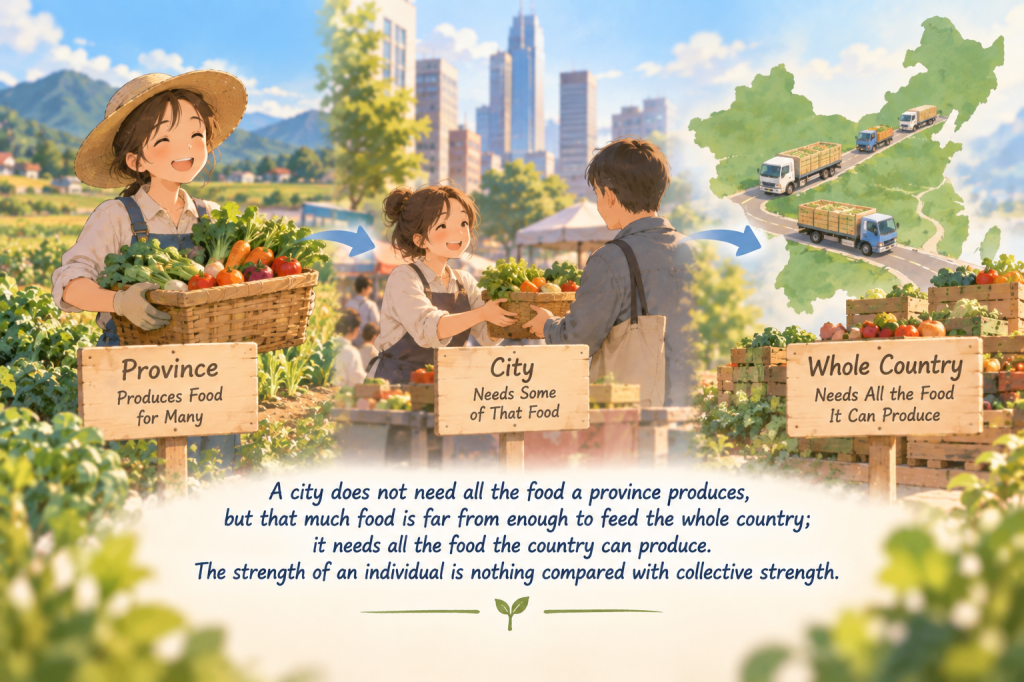
“A city does not need all the food a province produces, but that much food is far from enough to feed the whole country; it needs all the food the country can produce. The strength of an individual is nothing compared with collective strength.”

The meaning of this principle is that the size, corresponding energy, and function of all things in the world are relative and can be understood through comparison. Without comparison, we cannot discern what is large or small, nor can we understand the principles governing their appropriate application.

For example, if the farmland of an entire province were used to support only one city, it would seem vast and abundant. However, if an entire country had to depend on the farmland of just that one province, it would be insufficient to meet the needs of its people. Thus, the people of a nation require the land and resources of a nation to sustain them.

This illustrates an important principle: No matter how powerful an individual may be, and no matter how great that person’s abilities or talents are, the power of one person is ultimately limited. Only when the strength of many people is brought together can truly great power arise.

How can we better understand this principle? Let us consider several examples from everyday life.

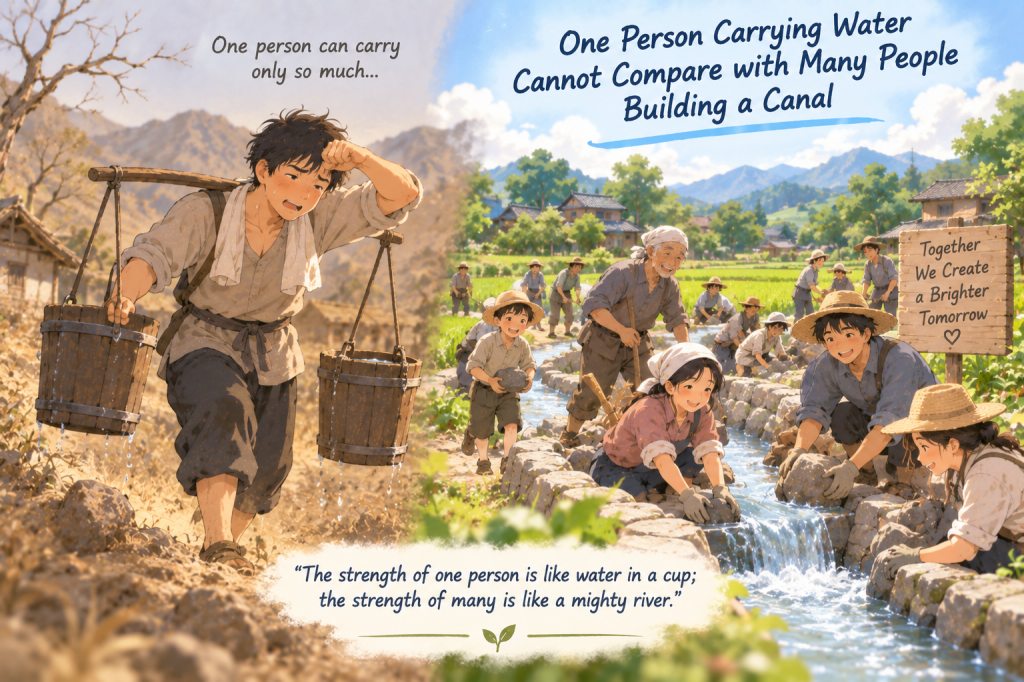
One Person Carrying Water Cannot Compare with Many People Building a Canal

Long ago, there was a mountain village that suffered from drought year after year. A remarkably strong man in the village could carry fifty loads of water each day, enough to support his own household and several neighboring families. The villagers praised him for his extraordinary strength.

But when a severe drought struck and hundreds of villagers desperately needed water, even his great strength was of little help. He broke his carrying pole and wore his shoulders raw, yet he still could not provide enough water for everyone.

Eventually, all the villagers—men and women, young and old—joined together to dig a canal, divert water, and build stone embankments. Three months later, clear water flowed into the village, and barren hillsides were transformed into fertile farmland.

The strong man sighed with realization:

“The strength of one person is like water in a cup; the strength of many is like a mighty river.”

Working Alone Cannot Compare with Advancing as a Team

At a technology company, there was a brilliant developer who independently created a piece of software with industry-leading performance. However, customers soon requested more than a hundred customized requirements. Despite working day and night, he was able to complete only a fraction of them.

The company later assembled a team. Some members specialized in interface design, others optimized algorithms, while still others communicated directly with customers. Within only three months, the team released multiple improved versions, and the company’s market share tripled.

The talented developer became thoroughly convinced of the power of teamwork:

“No matter how fast one person can run, he cannot outrun the wheels of a team moving together.”

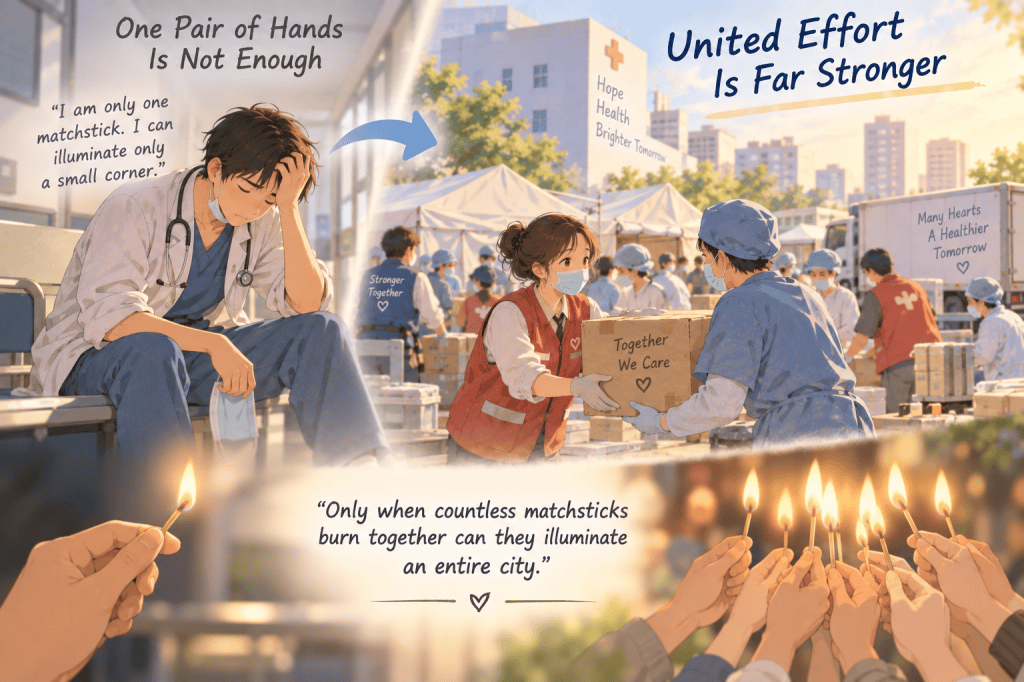
One Pair of Hands Is Not Enough; United Effort Is Far Stronger

“I am only one matchstick. I can illuminate only a small corner.”

This was the realization of a doctor who collapsed from exhaustion during an epidemic. He had worked continuously for 72 hours, treating dozens of patients, and people called him an “iron man.”

But when the number of infections surged into the thousands, his strength finally gave out, and he collapsed beside a hospital bed.

Soon afterward, medical workers, volunteers, logistics personnel, and community workers arrived from across the country in great numbers. Together, they built temporary medical facilities, delivered essential supplies, conducted screenings, and eventually brought the outbreak under control.

Reflecting on this, the doctor said:

“Only when countless matchsticks burn together can they illuminate an entire city.”

No matter how strong one person may be, that individual cannot surpass the strength created when many hearts unite. A single drop of water may seem insignificant, but countless drops come together to form an ocean. A handful of earth may seem inconsequential, but countless handfuls can rise into a mountain.

The principle expressed by the Buddha in the words, “A city does not need all the food a province produces, but that much food is far from enough to feed the whole country,” teaches us precisely this: the strength of an individual will eventually reach its limit, but when the strength of many is united, tremendous power can arise.

Yet if we wish to investigate more deeply and seek greater truths, we should seek them within the True Buddha Dharma expounded by Namo H.H. Dorje Chang Buddha III.

Alone, one may travel quickly; together, many can travel far.
The strength of one is limited; the strength of many is great.

May we cherish the light that each individual can offer while also understanding the importance of bringing together the flames of many. With our actions and with our hearts, may we put into practice the path of benefiting others.

By Yijie Xueren

How Great Is the Power of One Person?

Link: https://hhdorjechangbuddhaiiidharma.com/2026/09/14/how-great-is-the-power-of-one-person/

#DorjeChangBuddhaIII #Spirituality #Buddha #Buddhism

An Awakening While Stopped at a Red Light

An Awakening While Stopped at a Red Light

An Awakening While Stopped at a Red Light

Sometimes, what suddenly wakes us up and brings clarity to our minds is not the sound of a temple bell. It can be something as ordinary as watching the countdown on a traffic light at an intersection.

That day, I was riding my scooter and stopped at a red light. I found myself staring at the numbers as they counted down, one second at a time…

Normally, those numbers simply tell us how many seconds we have to wait before moving on. But for some reason, at that moment, something gently struck me deep inside.

I suddenly realized: It wasn’t just the traffic light that was counting down. Our lives are counting down too.

Every time another second disappears from the display, one second of our own lives is gone as well.

We often talk about the Buddhist teaching of “impermanence.” We have heard countless times how swiftly life passes and how quickly circumstances can change. In His Dharma discourses, Namo H.H. Dorje Chang Buddha III has also compassionately reminded us time and again of how frightening impermanence can be and how it is constantly unfolding right before our eyes.

Yet this is simply how we human beings are. We may understand these teachings intellectually, but somehow they never seem to truly frighten us deep down.

We continue drifting through our days in a haze. We still lose our temper. We still tightly hold on to attachments, grudges, and conflicts that we cannot seem to let go of. We always think there is still plenty of time. We simply assume that when the sun rises tomorrow, we will still be here.

It often takes an ordinary, seemingly insignificant moment to suddenly wake us up:

From the day we were born, our lives have already been counting down.

Older generations often say that the frightening thing is not that we are slowly growing old, but that we do not even realize we are growing older day by day.

When today passes, one more day of our life is gone. When this second slips away, we will never be able to get it back again.

The Verse of Admonition by Samantabhadra Bodhisattva says:

“This day has already passed, and our lives have likewise diminished. Like fish in a shrinking pool of water, what joy can there be? We should diligently and vigorously cultivate ourselves, as urgently as if extinguishing a fire upon our heads. Be ever mindful of impermanence, and never give way to negligence.”

Every time I read this verse, it strikes me deeply.

Aren’t we just like fish in a pond whose water is slowly drying up? The water decreases day by day, yet we are still fighting fiercely with one another over a few pieces of fish food, completely forgetting that before long, when the water dries up, none of us can escape what follows.

When we look back carefully at all the noise and turmoil of this world—the pursuit of fame and personal gain, who wins and who loses—the things that once seemed unbearable, the things we thought we could never let go of, what do they amount to when we look back several years later?

They were little more than a dream from which we eventually awakened.

What truly matters in life has never been whether everything goes our way at this particular moment. What really matters is whether, during this lifetime, we have sincerely followed the Buddha’s teachings, whether we have earnestly cultivated ourselves, and whether we have worked toward freeing ourselves from the suffering of reincarnation.

If we can show others a little more compassion, then let us do so.

If we can lessen our attachments even a little, then let us loosen our grip.

If there is a good deed we can do today or a kind thought we can give rise to today, we should not put it off until tomorrow.

Because none of us knows what awaits us after the light turns green and we pass through this intersection.

At the next crossroads, will we simply continue along the familiar road we have traveled so many times before—or will we have reached the end of our journey in this life?

While we still have the strength, and while we still possess this precious human body, let us remind ourselves of this at every moment.

Do not wait until the light has gone out to regret having let this precious life pass by in vain.

—Buddhist disciple Gao Qiyuan
August 6, 2026

Learn more about H.H. Dorje Chang Buddha III

Link: https://hhdorjechangbuddhaiiidharma.com/2026/08/23/an-awakening-while-stopped-at-a-red-light/

#DorjeChangBuddhaIII #MasterWanKoYee #BuddhistTeachings #BuddhaDharma #BuddhistWisdom #Impermanence #Mindfulness #BuddhistPractice #SpiritualAwakening #Buddhism

Westerners Express Their Admiration for H.H. Dorje Chang Buddha III

Westerners Express Their Admiration for H.H. Dorje Chang Buddha III

Westerners Express Their Admiration for H.H. Dorje Chang Buddha III

My Buddhist name is Bodi Wentu Rinpoche. I became a disciple of H.H. Dorje Chang Buddha III Wan Ko Yeshe Norbu Holiest Tathagata in Sichuan, China in late 1995. I would like to relate two examples that reflect H.H. Dorje Chang Buddha III’s highest mastery of the Five Vidyas. 

After I returned to the United States from Sichuan, I began translating from Chinese into English ten discourses on the Buddha-dharma given by H.H. Dorje Chang Buddha III. A fellow disciple named Losang Gyatso Rinpoche assisted me in that translation.

Westerners Express Their Admiration for H.H. Dorje Chang Buddha III

One day in 1998 when H.H. Dorje Chang Buddha III was visiting the United States, Losang Gyatso Rinpoche and I went to the place where H.H. Dorje Chang Buddha III was staying to pay our respects to him and present the translation of those discourses to His Holiness for His Holiness’s review. The translation was put in sealed envelopes. Right after we prostrated to H.H. Dorje Chang Buddha III but before we presented the translation to His Holiness, H.H. Dorje Chang Buddha III said, “You have earned great merit and made a great contribution to living beings. Although the translation that you brought today contains some minor mistakes, it will still be of great benefit to westerners.” Before we even reported anything to H.H. Dorje Chang Buddha III, His Holiness already knew what we wanted to report. This moved me very much. Losang Gyatso Rinpoche and I then presented to H.H. Dorje Chang Buddha III the sealed envelopes containing the translation.

The second example occurred in 1999. I and other fellow disciples accompanied H.H. Dorje Chang Buddha III to Missouri, where H.H. Dorje Chang Buddha III received an honorary doctorate degree in Buddhism, Art, and Religious Studies from the American League of Colleges and Universities. After the presentation ceremony, all of us sat down to eat dinner. There were a number of college and university deans, presidents, and professors in attendance. The president of a religious college asked whether questions could be posed to His Holiness. H.H. Dorje Chang Buddha III responded, “Ask whatever questions you would like to ask. All of my answers will satisfy you.” H.H. Dorje Chang Buddha III answered all of the questions posed with total ease, which evoked great admiration. The president of that religious college asked the most difficult question, which H.H. Dorje Chang Buddha III easily answered, causing the president to blush with embarrassment. When there were no more questions, the chairman of the American League of Colleges and Universities expressed how awestruck he was with the answers of H.H. Dorje Chang Buddha III by suddenly slapping himself once on each cheek. He then excitedly and loudly stated that he has lived in vain for all of these years and that the answers of H.H. Dorje Chang Buddha III had truly opened his eyes. The president of the religious university also marveled at the wisdom that H.H. Dorje Chang Buddha III displayed that evening. One can see from this how complete the wisdom of H.H. Dorje Chang Buddha III is.

There are many other examples I could relate concerning H.H. Dorje Chang Buddha III’s highest mastery of the Five Vidyas and His Holiness’s great compassion toward living beings. However, due to limited space, I will stop here. May this book be a blessing for all living beings, and may it aid in liberating them from the sufferings of reincarnation.     

Buddhist disciple, Bodi Wentu

(The Chinese translation of this text follows.)

Learn more about H.H. Dorje Chang Buddha III

Explore more articles on the Virtue of H.H. Dorje Chang Buddha III and Holy Occurrences.

Source: H.H. Dorje Chang Buddha III — A Treasury of True Buddha-Dharma, pp. 180-181.

Link: https://hhdorjechangbuddhaiiidharma.com/2026/03/30/westerners-express-their-admiration-for-h-h-dorje-chang-buddha-iii/

#DorjeChangBuddhaIII #HHDorjeChangBuddhaIII #MasterWanKoYee #WesternBuddhism #BuddhistTeachings #TrueBuddhaDharma #BuddhaVajradhara #BuddhistLeader #DharmaInTheWest #SpiritualAwakening #Buddhism

A Wild Squirrel Offered Avocadoes to H.H. Dorje Chang Buddha III

A Wild Squirrel Offered Avocadoes to H.H. Dorje Chang Buddha III

A Wild Squirrel Offered Avocadoes to H.H. Dorje Chang Buddha III

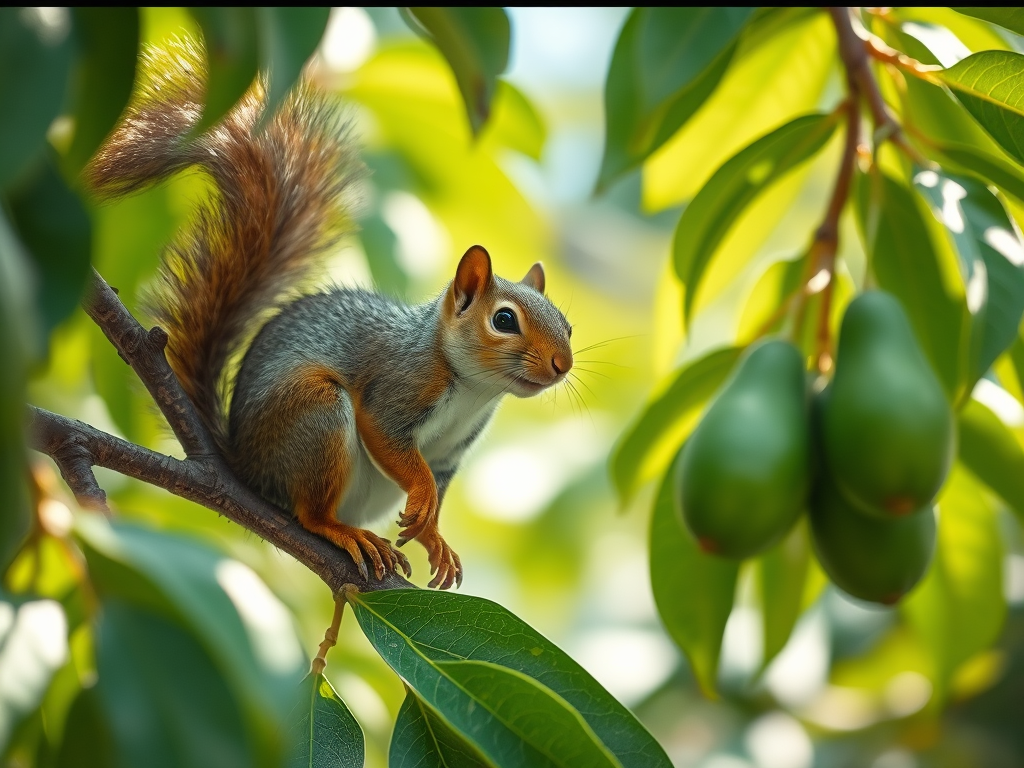
In the afternoon of April 24th, 2000, disciple Long Zhi (H.E. Denma Tsemang II), and Juehai walked along the swimming pool with H.H. Dorje Chang Buddha III Wan Ko Yeshe Norbu Holiest Tathagata in the outer area of the mandala. H.H. Dorje Chang Buddha III pointed to an avocado tree and said, “I want everyone to try the fruits.” So H.H. Dorje Chang Buddha III told Long Zhi to get a fruit catcher. Long Zhi looked around and didn’t find one. H.H. Dorje Chang Buddha III said, “We have to pick some avocados.” Right after H.H. Dorje Chang Buddha III spoke these words, a brown squirrel came down from an old pine tree. H.H. Dorje Chang Buddha III told everyone, “Don’t chase the squirrel away. It came to help.”

The squirrel climbed up the avocado tree and started looking for avocados. It started to use all of its skills by jumping from branch to branch, hanging upside down, and sometimes holding on to a branch with just one paw to locate the avocados. It was hard to see the green avocados amongst the very bushy green leaves. But the squirrel was able to distinguish them and delivered the avocados one by one. In less than ten minutes, the squirrel delivered six avocados. H.H. Buddha Master said that was enough. So Long Zhi told the squirrel: “Hey, squirrel, you have been working hard. Your offering has built up plenty of merit. It is enough.” The squirrel stopped and stayed on the branch. It looked at H.H. Dorje Chang Buddha III with both paws held together. These six avocados were offerings to H.H. Dorje Chang Buddha III by the squirrel.

When H.H. Dorje Chang Buddha III was about to leave, the squirrel did one prostration in front of the Buddha Master and slowly departed. Since then, the nuns who live at the holy mandala watch squirrels climbing on the avocado tree but never see the avocados being picked anymore as offerings.

Dragon fish stood up on the water to show their respect for His Holiness. Animals offered fruits to His Holiness. Cases like these can hardly be found among other dharma kings and eminent monks in history.

The story of the squirrel offering six avocados to H.H. Dorje Chang Buddha III recorded by Long Zhi and Juehai is totally true. If it is not true, we will be responsible for all resulting bad karma. If it is true, the merits will be dedicated to all living beings in the six realms of reincarnation. May they be able to listen to true Buddha-dharma from H.H. Dorje Chang Buddha III.

                                                                                                                     Long Zhi

(This is a complete translation of the Chinese text that follows originally written and signed by Long Zhi.)

A Wild Squirrel Offered Avocadoes to H.H. Dorje Chang Buddha III

Learn more about H.H. Dorje Chang Buddha III

Explore more articles on the Virtue of H.H. Dorje Chang Buddha III and Holy Occurrences.

Source: H.H. Dorje Chang Buddha III — A Treasury of True Buddha-Dharma, pp. 161–162.

Link: https://hhdorjechangbuddhaiiidharma.com/2025/12/28/a-wild-squirrel-offered-avocadoes-to-h-h-dorje-chang-buddha-iii/

#DorjeChangBuddhaIII #WanKoYesheNorbu #MasterWanKoYee #BuddhistMiracle #BuddhistExperience #AnimalOffering #BuddhismAndNature #SacredSigns #LivingBeings #Buddhism #SpiritualStory

The Recognition of H.H. Dorje Chang Buddha III: Does a Buddha Need to Be Recognized?

The Recognition of H.H. Dorje Chang Buddha III: Does a Buddha Need to Be Recognized?

The Recognition of H.H. Dorje Chang Buddha III: Does a Buddha Need to Be Recognized?

Worldwide Recognition of H.H. Dorje Chang Buddha III by Eminent Buddhist Leaders

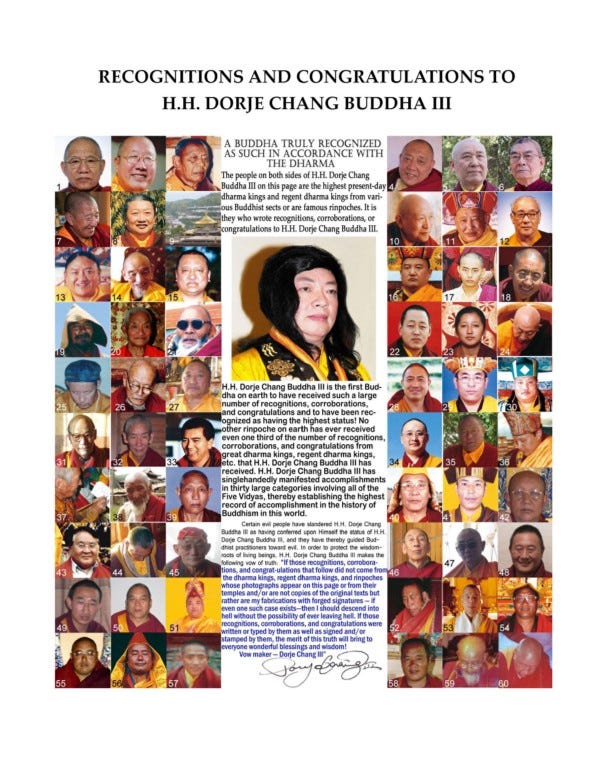
Recognitions and Congratulations to H.H. Dorje Chang Buddha III

When over a hundred great Dharma Kings, Regents, and Rinpoches from various Buddhist traditions throughout the world lawfully recognized, in accordance with Buddhist precepts, that Namo H.H. Dorje Chang Buddha III is the reincarnation of the ancient Buddha, Buddhist disciples around the globe rejoiced in celebration. The descent of Namo H.H. Dorje Chang Buddha III brings to the beings of this Dharma-ending age the correct and unerring True Dharma of the Tathagata that leads to liberation from the cycle of birth and death. How fortunate living beings are to personally hear the teachings of the Buddha — there is now hope for attaining enlightenment in this very lifetime!

Online Slander and Misunderstanding of H.H. Dorje Chang Buddha III’s Holy State

However, some people on the internet refuse to face the legitimate recognitions, the holy realization, and the perfect mastery of the Five Vidyās and teachings of H.H. Dorje Chang Buddha III with reason or correct understanding. Instead, they fabricate rumors, spread insults, slander, defamation, and false accusations — maliciously twisting facts, inventing lies, and making baseless claims. They use vulgar words, forge fake documents, false notices, and false statements, and even create distorted images and mocking content — doing everything they can to attack H.H. Dorje Chang Buddha III. Through their own words and actions, they merely expose their ignorance and lack of virtue.

Some say, “A Buddha or Bodhisattva is realized through practice, not by ‘recognition.’” “Shakyamuni Buddha didn’t need a certificate of recognition.” But their purpose is clear — to stop more people from learning the true Buddha Dharma and attaining liberation!

So, does a Buddha need recognition when descending into the world?

A Practice for the Benefit of Sentient Beings.

A Buddha is one of unsurpassed, perfect enlightenment and complete wisdom. The reason one is a Buddha lies in their realization and enlightenment — not because of any recognition by others. No matter how great a Dharma King, Regent, or Rinpoche may be, their level of realization is far inferior to that of a Buddha; thus, any recognition they offer to a Buddha would be, in essence, just a piece of paper of no value to the Buddha.

However, because sentient beings in this world often lack the wisdom to discern between true and false saints, between genuine Buddha Dharma and false teachings that imitate Buddhism, they may easily be misled by superficial appearances and deviant views. Therefore, for the benefit of sentient beings, by following the Buddhist tradition of formal recognition, those virtuous masters issued such recognitions that help people give rise to faith and thus be saved. This is an act of right knowledge and right view.

The Example of Master Padmasambhava and the Importance of Recognition

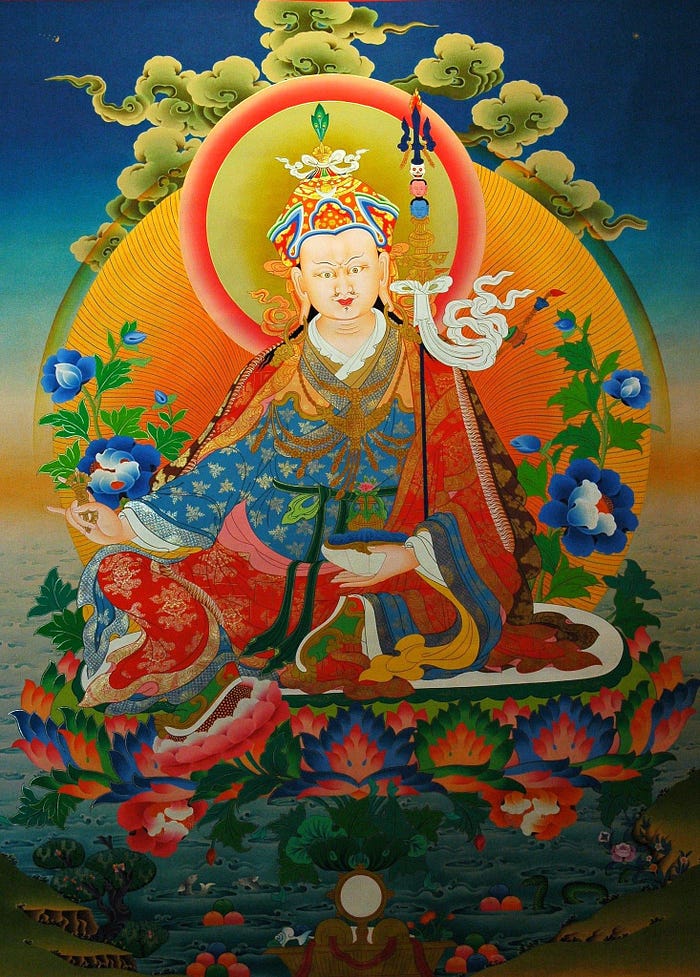
Master Padmasambhava

When Master Padmasambhava first went to Tibet to propagate the Dharma, he was not greeted with respectful welcoming crowds. Instead, the Tibetan people were terrified and shouted, “Quick! Drive out this sorcerer who performs strange magic without lineage transmission! Do not let him deceive us with his witchcraft!” They even lifted him up and threw him into a muddy pit. Later, Master Padmasambhava returned to India and asked two renowned masters to write letters of recognition. Only then did Buddhism begin to flourish in Tibet. In fact, those two masters later became Master Padmasambhava’s disciples.

Therefore, when Buddhas or Bodhisattvas reincarnate and manifest again in this world, undergoing recognition according to Buddhist rules is not for their own sake, but for the sake of helping sentient beings generate faith and thereby be liberated.

The Supreme Conduct and Realization of H.H. Dorje Chang Buddha III

Indeed, the realization and attainment of a Buddha or Bodhisattva come from their own cultivation and enlightenment. The realization, virtue, and attainment of all Buddhas and Bodhisattvas are the manifestation of their supreme enlightenment. The pure and flawless conduct of Namo H.H. Dorje Chang Buddha III, His mastery of both exoteric and esoteric teachings, His perfect command of the Five Vidyās, and His countless acts of liberating sentient beings — all fully demonstrate the enlightenment and realization of a true Buddha!

Therefore, I sincerely advise those who slander: repent sincerely before the Buddhas and Bodhisattvas, or karmic retribution will not spare you! At the same time, I compassionately remind all who truly wish to learn and practice Buddhism: we live in the Dharma ending age, when confusion prevails, and the nature of the demonic offspring is to destroy the Dharma and obstruct sentient beings from learning the true path. Kind-hearted beings, please open your eyes of wisdom, discern the true from the false, and do not be deceived by demonic forces — lest you miss the supreme Dharma opportunity that can bring you liberation from birth and death in this very lifetime!

Source: https://dharma-hhdorjechangbuddhaiii.org/the-recognition-of-h-h-dorje-chang-buddha-iii-does-a-buddha-need-to-be-recognized/

Link: https://hhdorjechangbuddhaiiidharma.com/2025/11/17/the-recognition-of-h-h-dorje-chang-buddha-iii-does-a-buddha-need-to-be-recognized/

#DorjeChangBuddhaIII #HHDorjeChangBuddhaIII #DorjeChangBuddha #TrueDharma #Buddhism #Vajradhara #LivingBuddha #BuddhistWisdom #BuddhaRecognition #ModernBuddhism