An Awakening While Stopped at a Red Light
An Awakening While Stopped at a Red Light

An Awakening While Stopped at a Red Light

Sometimes, what suddenly wakes us up and brings clarity to our minds is not the sound of a temple bell. It can be something as ordinary as watching the countdown on a traffic light at an intersection.

That day, I was riding my scooter and stopped at a red light. I found myself staring at the numbers as they counted down, one second at a time…

Normally, those numbers simply tell us how many seconds we have to wait before moving on. But for some reason, at that moment, something gently struck me deep inside.

I suddenly realized: It wasn’t just the traffic light that was counting down. Our lives are counting down too.
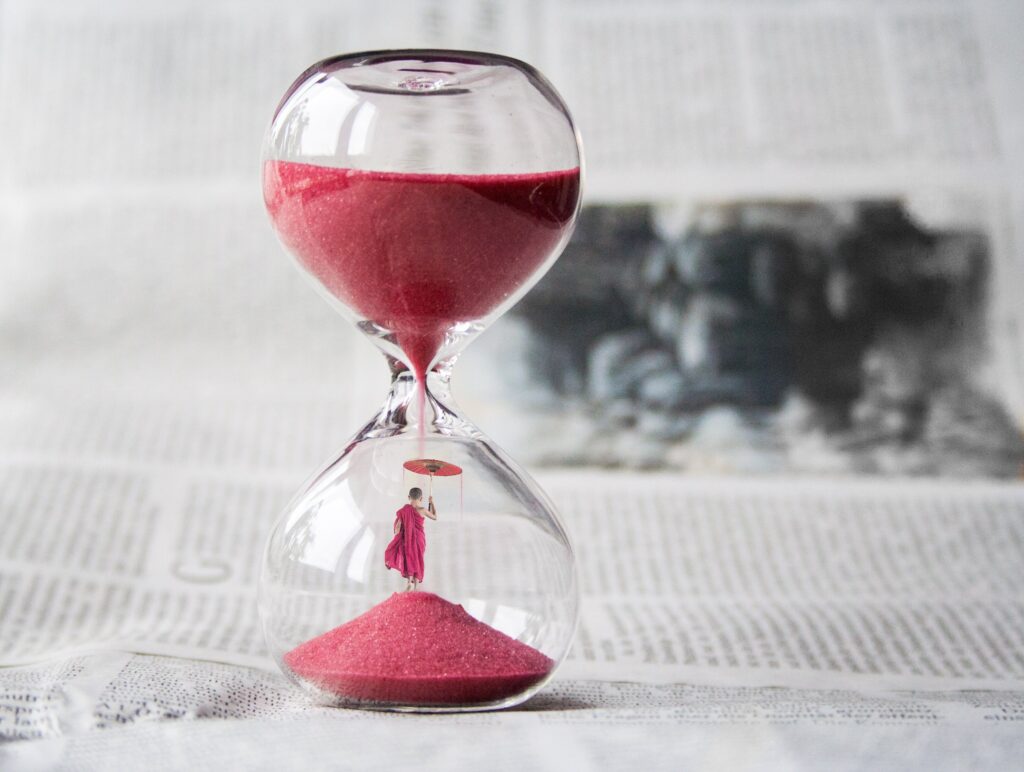
Every time another second disappears from the display, one second of our own lives is gone as well.

We often talk about the Buddhist teaching of “impermanence.” We have heard countless times how swiftly life passes and how quickly circumstances can change. In His Dharma discourses, Namo H.H. Dorje Chang Buddha III has also compassionately reminded us time and again of how frightening impermanence can be and how it is constantly unfolding right before our eyes.

Yet this is simply how we human beings are. We may understand these teachings intellectually, but somehow they never seem to truly frighten us deep down.

We continue drifting through our days in a haze. We still lose our temper. We still tightly hold on to attachments, grudges, and conflicts that we cannot seem to let go of. We always think there is still plenty of time. We simply assume that when the sun rises tomorrow, we will still be here.

It often takes an ordinary, seemingly insignificant moment to suddenly wake us up:

From the day we were born, our lives have already been counting down.

Older generations often say that the frightening thing is not that we are slowly growing old, but that we do not even realize we are growing older day by day.

When today passes, one more day of our life is gone. When this second slips away, we will never be able to get it back again.

The Verse of Admonition by Samantabhadra Bodhisattva says:

“This day has already passed, and our lives have likewise diminished. Like fish in a shrinking pool of water, what joy can there be? We should diligently and vigorously cultivate ourselves, as urgently as if extinguishing a fire upon our heads. Be ever mindful of impermanence, and never give way to negligence.”
Every time I read this verse, it strikes me deeply.

Aren’t we just like fish in a pond whose water is slowly drying up? The water decreases day by day, yet we are still fighting fiercely with one another over a few pieces of fish food, completely forgetting that before long, when the water dries up, none of us can escape what follows.

When we look back carefully at all the noise and turmoil of this world—the pursuit of fame and personal gain, who wins and who loses—the things that once seemed unbearable, the things we thought we could never let go of, what do they amount to when we look back several years later?

They were little more than a dream from which we eventually awakened.

What truly matters in life has never been whether everything goes our way at this particular moment. What really matters is whether, during this lifetime, we have sincerely followed the Buddha’s teachings, whether we have earnestly cultivated ourselves, and whether we have worked toward freeing ourselves from the suffering of reincarnation.

If we can show others a little more compassion, then let us do so.

If we can lessen our attachments even a little, then let us loosen our grip.

If there is a good deed we can do today or a kind thought we can give rise to today, we should not put it off until tomorrow.

Because none of us knows what awaits us after the light turns green and we pass through this intersection.

At the next crossroads, will we simply continue along the familiar road we have traveled so many times before—or will we have reached the end of our journey in this life?

While we still have the strength, and while we still possess this precious human body, let us remind ourselves of this at every moment.

Do not wait until the light has gone out to regret having let this precious life pass by in vain.

—Buddhist disciple Gao Qiyuan
August 6, 2026

Learn more about H.H. Dorje Chang Buddha III

Link: https://hhdorjechangbuddhaiiidharma.com/2026/08/23/an-awakening-while-stopped-at-a-red-light/

#DorjeChangBuddhaIII #MasterWanKoYee #BuddhistTeachings #BuddhaDharma #BuddhistWisdom #Impermanence #Mindfulness #BuddhistPractice #SpiritualAwakening #Buddhism
Before You Complain Today, Read This

Before You Complain Today, Read This

Before You Complain Today, Read This

We often hear people complain that life is not going their way: their salary is not high enough, their house is not big enough, or their luck is not good enough. Their brows are furrowed as though the entire world were working against them. Yet, when we look carefully at their circumstances, their bodies are healthy, their families are safe, and they have food to eat and clothes to wear, we may wonder: Why are they filled with so much dissatisfaction?

Many people spend their lives taking their blessings for granted.

Human beings have a peculiar tendency: we quickly grow accustomed to what we possess yet remain constantly preoccupied with what we lack. When we are healthy, we rarely think of effortless breathing as a gift. Only when a cold leaves us congested do we understand how precious it is to breathe freely. When we are young, we seldom consider strong and agile legs a blessing. Only when our knees begin to ache do we miss the freedom of running.

Happiness is much the same. It quietly surrounds us and seems as natural as the air we breathe. Only after it is lost do we suddenly realize that it was there all along.

I once knew a friend who had just recovered from a serious illness. In the past, he often complained—about the demands of his job, his limited income, and the dullness of everyday life. Yet after leaving the hospital, he seemed like a different person. The morning sunlight moved him deeply. A simple bowl of plain rice porridge brought him contentment. The sound of his child’s laughter brought tears to his eyes.

He said:

“While I was lying in the hospital bed, I could think of nothing else. I only wanted to recover—to be able to walk normally and eat normally again. Now that I have regained these things, I finally understand that an ordinary life is the greatest blessing of all.”

This reminds me of a teaching given by Namo H.H. Dorje Chang Buddha III in Philosophical Sayings About Worldly Matters:

“A person not appreciative of the good life he is living is one who has forgotten his past miseries. A person in good health is not aware of its blessings until he loses it.”

This means that some people live amid blessings without recognizing them. Although their circumstances are good in many ways, they remain dissatisfied, finding fault with one thing after another. They are filled with complaints and self-pity.

The main reason is that they have become immersed in favorable conditions and have forgotten the existence of hardship. While enjoying happiness, they forget the difficulties they once endured. In the same way, strong and healthy people often fail to understand the suffering of illness. They neglect to protect their health and do not cherish their strong bodies. Only after falling ill—confined to bed, unable to move, and without an appetite—do they finally understand the joy and blessing of good health.

The Buddha has long revealed this truth to the world. Regrettably, not everyone has the good fortune to respectfully listen to the authentic Buddha Dharma personally taught by Namo H.H. Dorje Chang Buddha III. Many people pass through life in confusion and unawareness. Only when illness comes do they understand the value of health, and only after something is lost do they recognize the happiness they once possessed.

Those who fail to appreciate their blessings may not necessarily be ungrateful by nature. Perhaps they have simply forgotten that adversity exists. Having grown accustomed to favorable circumstances, they begin to regard them as something they are naturally entitled to. Having forgotten their former hardships, they become blind to the peace and stability before them.

It is like someone who has lived for so long in a room filled with orchids that they no longer notice the fragrance. In the same way, those who remain surrounded by happiness for too long may cease to recognize it.

In truth, happiness does not require luxurious clothing, fine food, fame, or worldly success. It is hidden within every ordinary day: waking in the morning without illness, having a home to return to at night, having food when hungry, clothing when cold, and someone to rely upon when weary.

May we all pause in our habit of complaining. Tonight, before going to sleep, take a moment to count what you possessed today: one easy breath, one warm meal, one word spoken and answered—and the opportunity to learn the authentic Buddha Dharma.

Then quietly remind yourself:

This, too, is a blessing.

Written by Yijie Xue

Learn more about H.H. Dorje Chang Buddha III

Link: https://hhdorjechangbuddhaiiidharma.com/2026/08/10/before-you-complain-today-read-this/

#DorjeChangBuddhaIII #MasterWanKoYee #BuddhistTeachings #BuddhaDharma #Gratitude #StopComplaining #Mindfulness #SpiritualGrowth #LifeLessons #BuddhistWisdom